Tag Archives: english bulletin

English bulletin March 1, 2016

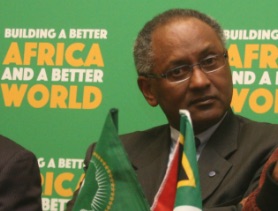
. . THE STRUGGLE OF AFRICA . .

There is an epic struggle for the heart of Africa between the forces of the culture of war and those of the culture of peace. On the one hand, attacks by Boko Harem, Al Qaida, ISIS, and Al-Shabaab get the headlines in the commercial media, not to mention potential for civil war in Burundi and the fratricidal war in Southern Sudan, On the other hand, if the many recent articles in CPNN about initiatives for the culture of peace are an indication, it is the culture of peace that is gaining!

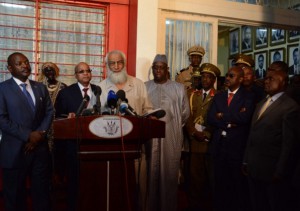
African Union: Burundi agrees to accept African Union human rights monitors

African Union: 26th Ordinary Session of the AU Assembly concludes with gratitude to Ebola fighters and peace as priorities of the continent

African Union: Retreat of the Pan-African Network of the Wise

Senegal: The feminist Bineta Diop: United against war in Africa

Tunisia: Appeal for massive particiption in the first international meeting on education for peace

Cameroon: Community radio in the service of peace education

Morocco: Muslims Advance Consensus for Citizenship for All: The Marrakesh Declaration

Mali: Elaboration of a national program for culture of peace: Experts at work

Ethiopia: AAPI Convenes 2nd Arts4Peace Forum in Addis Ababa

Congo (DRC): Declaration of the Youth Clubs of the Congo Peace Network

Congo (DRC): Goma, Nord Kivu: Third edition of the Amani Music Festival

Sierra Leone News: Minister urge delegates to develop a culture of peace

The Gambia: ‘African countries must unite’

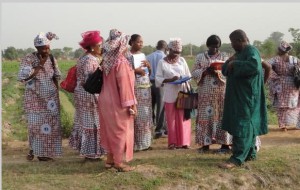
South Africa: African women organize to reclaim agriculture against corporate takeover

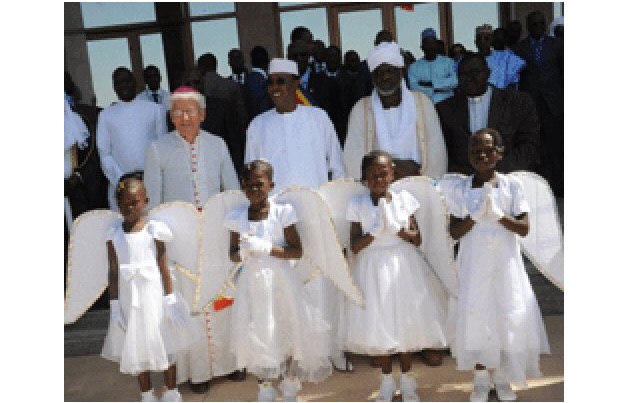
Chad: Commemoration of the National Day of peace, peaceful coexistence and national harmony

As Nestor Bidadanure describes in his article on How to Achieve the Freedom Promised: “In Africa, the decolonization in the legal sense has not been followed by an ideological break with the colonial model of governance by some of the political elite. . . The colonial practice of divide and rule is continued today as the favorite political weapon of extremist elites.”

He concludes that “The Culture of Peace should be considered and taught as an ideal that ties together and strengthens that which has been torn apart. It is the antithesis of Radical Identity Populism, a theory of inclusion and reconciliation with which we can achieve the freedom promised, an Africa at peace with herself and with the world. It considers the differences within a nation to be a precious resource. It reminds us that there is no national identity except the diversity, both cultural and human, of all its citizens.”


WOMEN’S EQUALITY

African Union
26th Ordinary Session of the AU Assembly concludes with gratitude to Ebola fighters and peace as priorities of the continent

DEMOCRATIC PARTICIPATION

swaby
US: New Haven Peaces Out. A Bit

DISARMAMENT AND SECURITY

BurundiBurundi agrees to accept African Union human rights monitors
HUMAN RIGHTS

drone protest
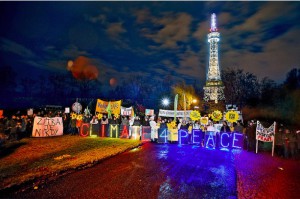
US: We come to the gates of Hancock Drone Base today to install a memorial of Jerry Berrigan.

TOLERANCE AND SOLIDARITY

Marrakesh
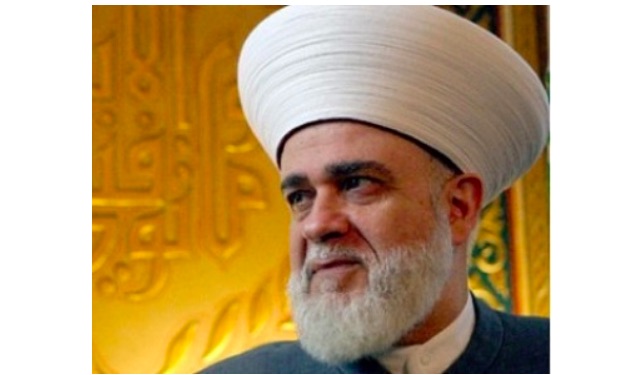
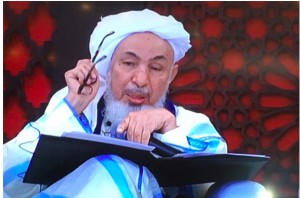
Muslims Advance Consensus for Citizenship for All: The Marrakesh Declaration

SUSTAINABLE DEVELOPMENT

solaires

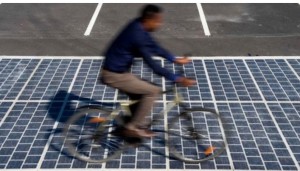
France expects to have 1000 kilometers of solar routes within 5 years!

FREE FLOW OF INFORMATION

colombia

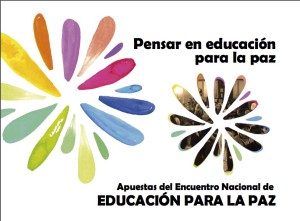
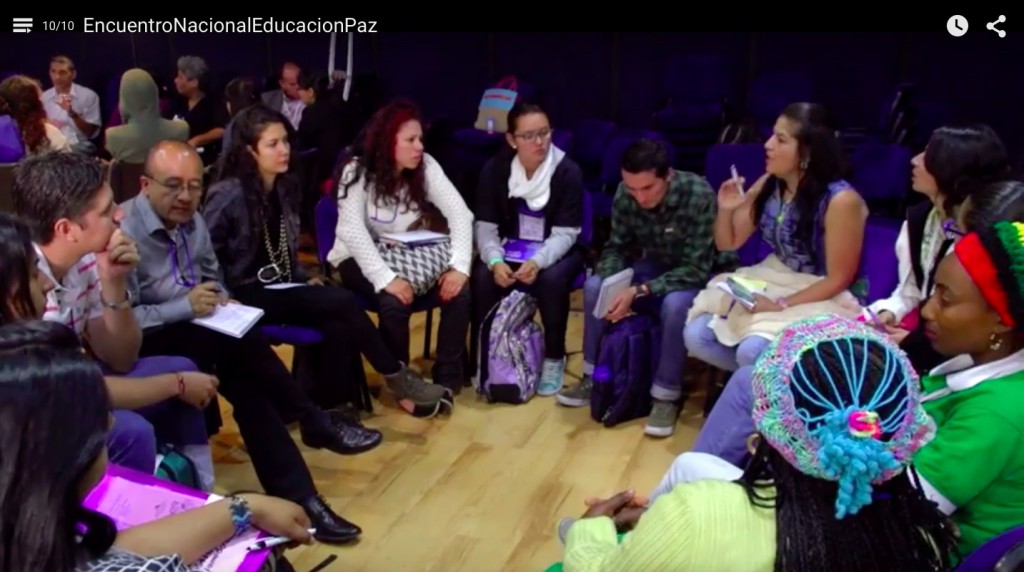
Colombia: National Meeting on Education for Peace

EDUCATION FOR PEACE

tunisia
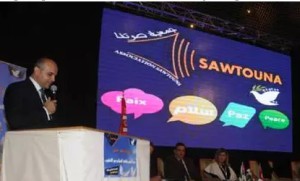
Tunisia: Appeal for massive particiption in the first international meeting on education for peace

English bulletin February 1, 2016

PEACE: ARE WE MAKING PROGRESS ?

As we enter the new year of 2016, we may ask if the culture of peace continues to advance on all the fronts that we covered in the various CPNN bulletins of 2015:

WELCOME THE REFUGEES (December): Despite the political resistance to refugees in Europe, there are also social movements in defense of the refugees. This was expressed recently by rallies throughout Europe marking the Global Day of Action against Racism. The Madrid Rally was held under the slogan: “We are all migrants and refugees, we all have rights.” Another slogan was “No to NATO!, making it clear that the influx of refugees is largely due to the military interventions by NATO in Africa and the Middle East.

CULTURE OF PEACE IN LATIN AMERICA (November): There are peace initiatives underway throughout Latin America. The November bulletin describes actions in Cuba, Bolivia, Argentina, Brazil, Nicaragua, Guatemala, Chile, Colombia and Honduras. Last month 500 delegates from 18 countries and 34 education trade unions in Latin America met in Costa Rica in the third meeting of the Pedagogical Movement to renew the cohesion and agenda for the future of education in Latin America.

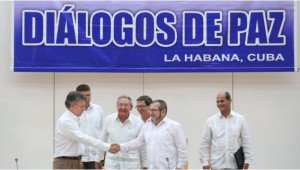
COLOMBIA PREPARES FOR PEACE (September): The biggest news for peace in Latin America last year was the progress of the peace process in Colombia. As indicated in the chronology published this month, we can expect the signing of peace accords in the month of March.

NEEDED: POLITICAL WILL AT COP21 (August): Although experts regret the lack of political will at the Climate Summit (see last month’s bulletin), the year 2015 has seen “amazing advances in renewable energy,” which raise hopes that we can reverse the process of global warming and climate change despite the failure of the nations to curb their reliance on fossil fuels.

CONFRONTING TERRORISM WITHOUT VIOLENCE (July): The mayors of Paris and Madrid, the cities of Europe that have suffered the most from terrorist attacks have announed that they will hold an international peace forum in response. Rather than promoting military responses, they propose education for non-violence. Similarly, UN Secretary-General Ban Ki-Moon has released a UN plan of action to confront violent extremism that calls for cultural rather than military measures. Since “extremism flourishes when human rights are violated, political space is shrunk, aspirations for inclusion are ignored, and too many people – especially young people – lack prospects and meaning in their lives. . . . [we need to emphasize] the critical elements for success: Good governance. The rule of law. Political participation. Quality education and decent jobs. Full respect for human rights. . . a special effort to reach out to young people and recognize their potential as peacebuilders.” The latter element is addressed in detail in the recent resolution 2250 of the United Nations Security Council on Youth, Peace & Security.

MOVEMENTS FOR FOOD SOVEREIGNTY (June): Six hundred representatives of native communities around the world recently gathered in Shillong, northeastern India, for Indigenous Terra Madre (ITM), an event that helps forge a global network of indigenous peoples, activists and their supporters. “The truth is that 500 million small household food communities feed 70 percent of the world, yet they are treated the worst of all”

THE ANTI-AUSTERITY SPRING (May): The Prime Minister of Portugal has said that the first measures of his government this year will begin to end the country impoverishment and social decline due to the policy of austerity. He came to power in the recent elections as a socialist candidate opposing austerity and is governing in coalition with the marxists parties and the communists. In Spain, Podemos which gained a large vote by opposing austerity is now trying to make a similar coalition with left political parties.

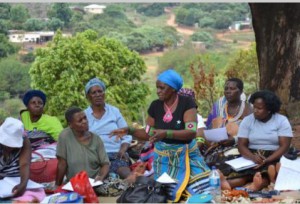
WOMEN, EQUALITY AND PEACE (April): African women, organized in Dzomo la Mupo, the Voice of the Earth, associated with the African Biodiversity Network, are reclaiming traditional agricultural practice, opposing the commercialization of farming: “Women also have to teach young girls and young women about seed and food sovereignty and the importance of soil because they’re the ones who will remain to pass that on.”

PEACE THROUGH TOURISM (March): A World Summit on Sustainable Tourism in November adopted a World Charter for Sustainable Tourism +20 incorporating the 17 Sustainable Development Goals adopted by the United Nations. The Charter also claims the preservation of the actual quality of the destinations and the tourism industry and the ability to meet the tourist as priorities, as well as the need to promote alternative forms of tourism.

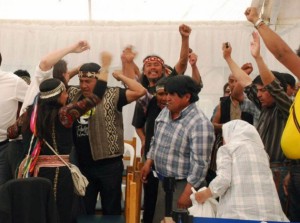
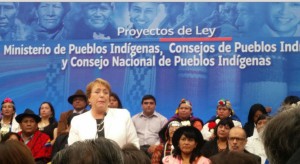
LISTEN TO THE INDIGENOUS (February): We recently republished “15 Indigenous Rights Victories That You Didn’t Hear About in 2015.” “Good news. Sometimes, it comes in the form of a cancelled hydro dam that spares 20,000 people from the burden of displacement. Other times, it takes the shape of a simple court admission that Indigenous Peoples do actually make the best conservationists. . . Indigenous rights victories give us all pause to celebrate, to reflect and to rejuvenate our own quests for justice.” And Chile has created a Ministry of Indigenous People, a National Council and Indigenous People”s Councils. Representatives of the ethic groups Aymara, Quechua, Atacameños, Diaguitas, Kollas, Rapa Nui, Kawesqar, Yaganes and Mapuche were consulted.

TRUTH COMMISSIONS (January 2015): In December, the final report of the Canadian Truth Commission was published. The writer reflects that “We, as a country, are just now starting to come to terms with the sobering realization that the systematic destruction of indigenous cultures, languages, family structures, lands and ceremonies amounted to cultural genocide. . . But change is possible. We can change, we are changing, and I am very hopeful that this momentum we have collectively generated will continue. I am excited about the future that lies ahead of us and I am proud to be part of this country that is embracing this cry for change and reconciliation.”


DEMOCRATIC PARTICIPATION

madrid forum<
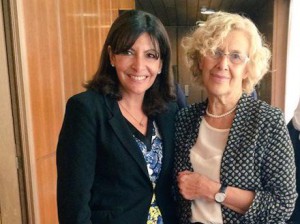
International Peace Forum Proposed by the Mayors of Madrid and Paris

WOMEN’S EQUALITY

africanwomen

African women organize to reclaim agriculture against corporate takeover

DISARMAMENT AND SECURITY

sipri
Global arms industry: West still dominant despite decline; sales surge in rest of the world, says SIPRI

HUMAN RIGHTS

indigenous

15 Indigenous Rights Victories That You Didn’t Hear About in 2015

TOLERANCE AND SOLIDARITY

Chile

President Creates Ministry of Indigenous People in Chile

SUSTAINABLE DEVELOPMENT

indigenous terra madre

Native Cultures Push For Sustainable Food Solutions

FREE FLOW OF INFORMATION

Colombia

The peace process in Colombia: A Chronology

EDUCATION FOR PEACE

tawfilis

US: The First Mural Museum in the World is a Culture of Peace Museum

English bulletin January 1, 2016

COP21: GOING BACKWARDS OR BEGINNING ?

There are many contradictory opinions about the results of the Paris Climate Agreement, so CPNN turned to two of the most independent and scientific authorities, James Hanson, the former Nasa scientist, who first alerted the world to climate change in 1988, and Naomi Klein, Canadian author, social activist, and filmmaker known for her political analyses and criticism of corporate globalization (see CPNN review of her most recent book, This Changes Everything).

According to James Hanson the agreement is a complete fraud, diverting us from the real cause of global warming. which is the continued reliance on oil and coal. According to his most recent research, if we do not radically cut this reliance, “the sea level could soon be up to five meters higher than it is today by the latter part of this century [which] would inundate many of the world’s cities, including London, New York, Miami and Shanghai.

According to Naomi Klein, the Paris agreement takes us backwards. At least the Kyoto Accord of 1997 included binding language, while the Paris Accord does not. And Klein makes the link between the reliance on oil and the disastrous wars of recent years: “Do we think Iraq would have been invaded if their major export had been asparagus [as journalist Robert Fisk once asked]? Probably not. We wanted that prize in the west, Iraq’s oil. . . This destabilized the whole region, which was not particularly stable to begin with because of earlier oil wars and coups and support for dictatorships.”

But there were other actors in Paris in addition to the representatives of national governments. The cities of the world were there, as were indigenous elders, African women and non-governmental organizations such as Greenpeace, and perhaps they can pick up where the national governments are failing.

ICLEI, “the world’s leading sustainability network of over 1,000 cities, towns and metropolises” pledged to continue their own actions “to make their cities and regions sustainable, low-carbon, resilient, eco-mobile, biodiverse, resource-efficient and productive, healthy and happy, with a green economy and smart infrastructure.” “Our pilot of the Transformative Actions Program (TAP) 2015 has brought forward 125 applications to demonstrate ambitious, crosscutting, and inclusive local action plans that have the potential to contribute to keeping global warming below 2°C.”

A meeting of indigenous elders in Paris released a statement saying, among other things, that “We are all responsible and we are all capable of creating a new path forward with new sources of energy that do not harm the people or the Earth. We are obligated to all take action now to protect what is left of the Sacredness of Water and Life. We can no longer wait for solutions from governmental and corporate leaders. We must all take action and responsibility to restore a healthy relationship with each other and Mother Earth.”

Wanjira Mathai, daughter of Nobel Peace Laureate Wangari Maathai, brought news to Paris about a new movement called AFR100 — the African Forest Landscape Restoration Initiative — [that] aims to restore 100 million hectares (386,000 square miles) of degraded and deforested landscapes in Africa by 2030.

And Kumi Naidoo, the Director of Greenpeace, while recognizing the shortcomings of the Paris Agreement, sees it as the beginning of a long road. It is the new generation that must take up the cause: “We need substantial, structural, systemic change – and this change can only be led by the youth, who are not infected by the political pollution of the past.”

That leads us to another agreement this past month that did not receive headlines, but which was led by those of the new generation who seek “substantial, structural, systemic change.”

Romeral Ortiz Quintilla tells us how she and others from the United Network of Young Peacebuilders launched a campaign to develop “a global framework that would recognize and guarantee the role of youth in peacebuilding and violence prevention.” They developed partnerships with key stakeholders such as the Secretary-General’s Envoy on Youth to the Peacebuilding Support Office, Search for Common Ground, World Vision and UN agencies such as UNDP, among others. As described previously in CPNN, two years ago, they came to the UN in New York to lobby for the effort.

On December 9, as a result of their efforts, the UN Security Council adopted resolution 2250 on Youth, Peace & Security. The resolution calls on Member States to “facilitate an enabling environment for youth to prevent violence, and to create policies which support youth socio-economic development and education for peace equipping youth with the ability to engage in political processes.”

Welcoming the adoption of the resolution, Romeral and UNOY now call on every young peacebuilder to join them in the next steps.


SUSTAINABLE DEVELOPMENT

Naomi Klein
Naomi Klein: We are going backwards, COP21 is the opposite of progress

WOMEN’S EQUALITY

girls

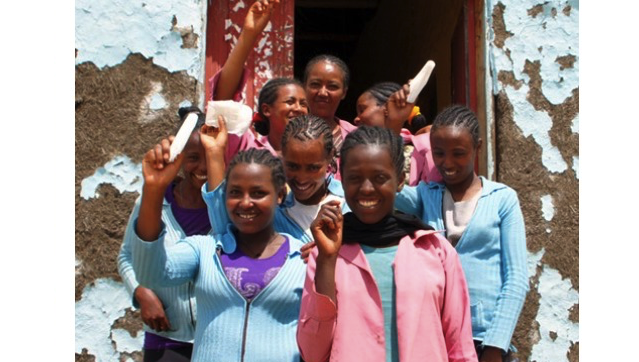
Eight ways 2015 was a momentous year for girls

DISARMAMENT AND SECURITY

palestine
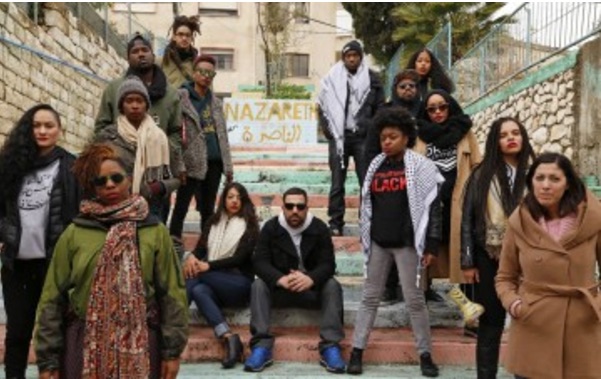
2015 Black Solidarity Statement with Palestine

HUMAN RIGHTS

canada
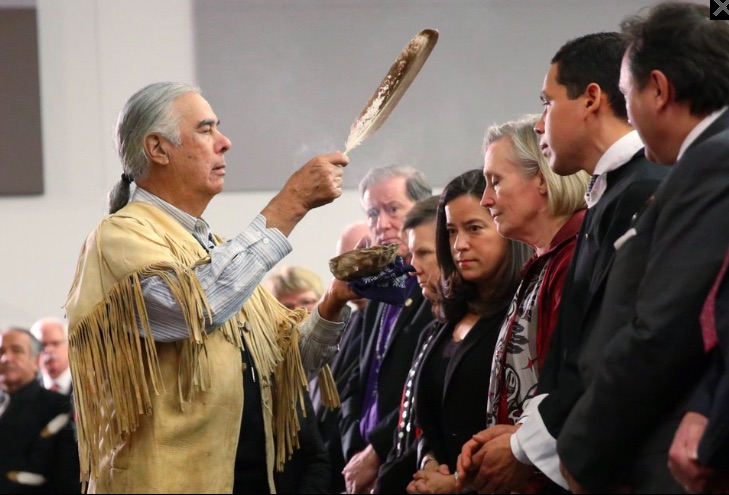
Reconciling Canada: Hard truths, big opportunity

TOLERANCE AND SOLIDARITY

Chad
Chad: Commemoration of the National Day of peace, peaceful coexistence and national harmony

DEMOCRATIC PARTICIPATION

cities
ICLEI Declaration to the Ministers at COP21, Paris, France

FREE FLOW OF INFORMATION

forum
Porto Alegre, Brazil: Fifteenth anniversary of the World Social Forum

EDUCATION FOR PEACE

pedagogical
Latin America: Pedagogical Movement: new phase, new impetus

English bulletin December 1, 2015

. . WELCOME THE REFUGEES . .

The refugee crisis in Europe has revealed the deep contradictions in the culture of war. As stated by the Nobel Peace Prize winners in their recent meeting in Barcelona: “The refugee and migration crisis does not exist in isolation. It is a symptom of the broader problems that confront humanity that include . . . the consequences of militarism, extreme nationalism and the use of force and proxy wars by global powers in pursuit of strategic, financial and ideological interests”

In his remarks on the crisis, Nobel Prize winner Kofi Annan says that Europe should consider the refugees as a potential resource rather than a liability. Taking this into consideration, at CPNN we look this month at the many initiatives around the world that welcome and integrate refugees into their societies.

In France, 15 civil society and international organizations are currently working to welcome and integrate refugees, which includes a network of 570 associations in the “Fédération nationale des associations d’accueil et de réadaptation sociale” (National Federation of Associations for Reception and Social Integration).

In Spain, the non-governmental Commission for Refugee Aid (CEAR) has the commitment of organizations and institutions in solidarity with refugees that form part of its Assembly: political parties, trade unions, religious groups and NGOs and prominent personalities in the field of defense and the human rights of asylum seekers. The School for the Culture of Peace in Barcelona is presently developing a map of cities with good practices in this regard.

Latin America has long been a leader in receiving refugees, with excellent legislation in many of its countries. The fundamental principles were adopted last December in Brasilia, on the occasion of the 30th anniversary of the 1984 Cartagena Declaration on Refugees. The action plan commits Latin American and Caribbean governments to approach the problem from a humanitarian point of view. Examples of this effort include the implementation of programs such as Quality Asylum, and Borders with Solidarity and Security, which address the needs of people who live, cross or return to border areas. With regard to the current crisis, some 6,000 Syrians have been received thus far in Brasilia, Buenos Aires and Montevideo.

In the United States Republican governors have opposed the reception of refugees from Syria, but in response, Cities United For Immigration Action, a coalition of nearly 100 cities and counties is leading the effort to promote and execute immigration reforms nationwide. The initiative includes a letter from 18 mayors of the most important cities, including New York, Chicago and Baltimore, saying among other things that “The global refugee crisis brings with it a responsibility and opportunity to welcome those seeking exile from tyranny and oppression.”

For example, the city of New Haven expressly invited a Syrian family that had been rejected by the Republican governor of Indiana, and the family was welcomed by the Democratic governor of Connecticut: “I assured them that not only was I welcoming them, but I was proud that they’ve come to the US and come to Connecticut.”

The American humorist and movie director Michael Moore summed up the struggle in an open letter to the Republican governor of his state of Michigan: “I just wanted to let you know that, contrary to your declaration of denying Syrian refugees a home in our state of Michigan, I myself am going to defy your ban and will offer MY home in Traverse City, Michigan, to those very Syrian refugees you’ve decided to keep out. I will contact the State Department to let them know I am happy to provide a safe haven to any Syrian refugee couple approved by the Obama administration’s vetting procedures in which I have full faith and trust. . . I’m asking anyone who can, anyone who has spare rooms in their homes or an empty apartment, cottage, or whatever, to make it available for Syrian and Iraqi refugees . . . THIS is what we want the “American way” to be from now on. No more war, or interfering in other people’s lives, no more turning our backs on the messes that we’ve created.”

And finally, we salute the 50 cities of ICORN (The International Cities of Refuge Network). Each ICORN member is a city of refuge and provides temporary shelter through residencies for persecuted writers and artists. The residency is typically for two years. According to ICORN, these “writers and artists represent a rich resource for the entire network of cities. They bring new impulses to the cultural life of each city; they contribute to enhancing knowledge about different cultures in your city and enrich our debate, our insight and our understanding.”

In the long run, the refugees can enrich our debate, our insight and our understanding that we must move from the present culture of war to a global culture of peace.


TOLERANCE AND SOLIDARITY

nobel
The Barcelona Declaration – Refugees: Meeting the Challenge to Our Humanity

WOMEN’S EQUALITY

geneva

International dialogue on gender equality in the media to be held in Geneva

DISARMAMENT AND SECURITY

drones
USA Exclusive: Air Force Whistleblowers Risk Prosecution to Warn Drone War Kills Civilians, Fuels Terror

HUMAN RIGHTS

wiego
Nearly 100 Home-based Workers from 24 Countries Gather in Delhi to Adopt Historic Delhi Declaration on Workers’ Rights

SUSTAINABLE DEVELOPMENT

food sovereignty
We are the solution: African women organize for land and seed sovereignty

DEMOCRATIC PARTICIPATION

cities
New Cities of Peace

FREE FLOW OF INFORMATION

Angola
Angola to host biennial on culture of peace in Africa

EDUCATION FOR PEACE

restorative
USA: Restorative Practices in Schools

English bulletin November 1, 2015

CULTURE OF PEACE IN LATIN AMERICA .

In the past two months we have carried no less than 18 articles about culture of peace from Latin America, as the continent continues to set an example for the rest of the world.

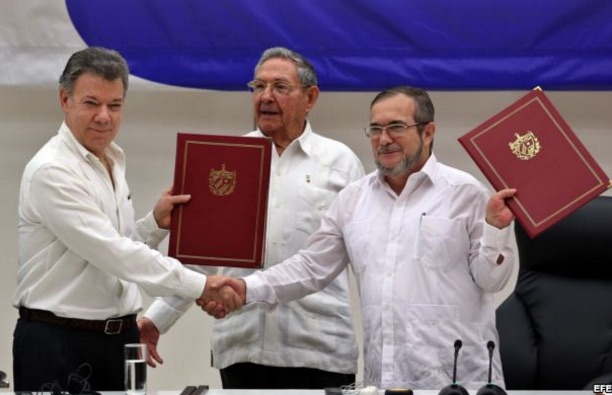
The leading edge is in Colombia which is emerging from decades of civil war. In Havana on September 23, the government and the FARC guerrilla movement signed a peace accord. And what is most important the entire Colombian people are becoming involved in the peace process. CPNN was privileged to take part in the National Encounter for Peace Education that took place October 1 and 2 in Bogota, involving a wide range of the civil society as well as government officials. Articles about the Encounter by Alicia Cabezuo of the International Peace Bureau and by David Adams are published in CPNN along with a link to a video of the meeting and an interview by Cabezudo about peace education. Colombian President Juan Manuel Santos took part in a nationally televised program on peace education with some of educators who took part in the Encounter. Earlier, the National Congress of REDUNDIPAZ met from September 21-23 to address “The Role of the University in Building Peace with Social Justice.” Then, on October 10, the government of Chile announced it is establishing a group of experts, veterans of peace processes in their countries, to work out of El Salvador on behalf of the Colombian agreement. This is a kind of international solidarity for peace that is rarely seen in other continents.

The culture of peace, as such, is on the agenda in Latin America, as shown by other recent CPNN articles. Cuba announced that it will advocate for this at UNESCO. In Argentina a cycle of events dedicated to this was held during the week of the International Day of Peace. Bolivian students marched for culture of peace.

In Brazil, a public hearing of the Congress was devoted to culture of peace in schools. While in Curitiba the Instituto Mundo Melhor (IMM) brought together police officers to discuss the culture of peace. And Cardinal Peter Turkson, the President of the Pontifical Council of Justice and Peace, spoke at an international symposium on “Promoting a Culture of Peace in a World of Conflict” that was held in Rio de Janeiro.

Latin America continues to make a major contribution to sustainable development. The governments of Bolivia, Ecuador and Venezuela announced at a forum in October that they will advocate for “Pachamama,” or Mother Earth, and civil society at the 21st United Nations Climate Change Conference in Paris in December. In this regard, CPNN recently carried articles about women dealing with waste management in Nicaragua, terrace farming by indigenous farmers in Chile, and a victory by the indigenous farmers of Guatemala against the monopoly practices of Monsanto.

In Guatemala, The Latin American Council for Peace Research (CLAIP) and the Latin American Faculty of Social Sciences (FLACSO) devoted their Third Regional Conference to “Latin America on the quest for sustainable peace: tools and contributions.” While in Honduras, the struggle of peasant movements for the reclaiming of stolen land is celebrated in the new film, “Fertile Ground“.

As we say in the video of the National Encounter for Peace Education in Colombia: “If you look at the news from around the world, there is war everywhere. . . [but] when we see that Colombia is going towards peace, it is an inspiration. If Colombia can make peace, se we can make peace in other countries also.”


FREE FLOW OF INFORMATION

encuentro
National Encounter for Peace Education in Colombia

WOMEN’S EQUALITY

parenthood
United States: Religious Groups Mobilize to Promote Feminism and Faith

DISARMAMENT AND SECURITY

no nato
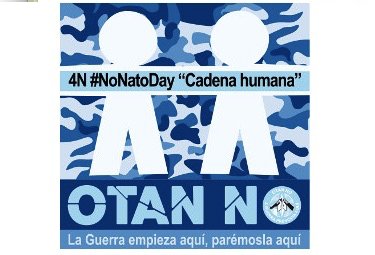
Spain: An appeal against NATO military exercises galvanizes demonstrations and civil disobedience actions

HUMAN RIGHTS

chomage
France: Territories of zero long-term unemployed

SUSTAINABLE DEVELOPMENT

terraces
Bolivia, Ecuador, Venezuela Agree to Defend Mother Earth at COP21

DEMOCRATIC PARTICIPATION

nobel
Nobel Peace Prize 2015: Lesson in Hope from Tunisia . . .

TOLERANCE AND SOLIDARITY

sudan
Beating the drum for peace: A chat with the general secretary of the South Sudan Council of Churches

EDUCATION FOR PEACE

brazil
Brazil: Public hearing discusses education for culture of peace

English bulletin October 1, 2015

INTERNATIONAL DAY OF PEACE 2015 .

Each year the International Day of Peace (September 21) reveals the spread of anti-war consciousness throughout the world. Last year the bulletin for October 1 concluded that “we have seen this month the most impressive mobilization for a culture of peace since the International Year for the Culture of Peace 14 years ago. In other words, we can say with certainty that the culture of peace is advancing.”

Can we say the same this year? Qualitatively, we can see many examples that suggest we are advancing.

As usual the UN Secretary-General marks the International Day of Peace by calling for cease-fires in the wars around the world. Others, such as the Director of Greenpeace, Kumi Naidoo, use the occasion to urge solidarity with refugees as well as the cessation of the wars that have forced them to flee. He salutes the many acts of solidarity by individuals and communities across Europe, and he quotes the poet Warsan Shire that ‘No one leaves home unless home is the mouth of a shark’. In a similar vein, the International Peace Bureau has given a share of its annual MacBride Prize to the Italian island of Lampedusa whose people have helped thousands of refugees trying to cross the Mediterranean to find asylum in Europe, and the Bureau makes the point that they are fleeing the military interventions by Europe in their homelands.

Peace One Day has been campaigning for over 17 years, making the case for Peace Day. This year it is sponsoring ‘ONE’, the Peace Day anthem recorded by musicians together from five African countries: Zwai Bala (South Africa), Ice Prince (Nigeria) Maurice Kirya (Uganda), Alikiba (Tanzania), Wangechi (Kenya) and Dama Do Bling (Mozambique). The anthem was premiered at the Peace One Day Youth Celebration in Kigali, Rwanda which featured performances from artists from across the Great Lakes region of Africa.

In the United States, the Campaign Nonviolence coordinates hundreds of actions around the country to foster a culture of peace through the power of nonviolence. Last year the campaign was launched with 239 actions and events in every part of the nation.

Here are some other celebrations from around the world:

The United Nations Association of New Zealand celebrated the International Day of Peace at Parliament in the Legislative chamber. In Zimbabwe, dancers, actors and poets came together to commemorate the International Day of Peace with performances at Zimbabwe Hall in Highfield. The Kashmir Peace Network is celebrating International Day of Peace at ‘Samad’s Island of Peace’ in Nageen. They are participating in the Global Feast for Peace, coordinated by the International Cities of Peace, along with many other cities around the world.

The peace activists of Ashland, Oregon (US) have used the day to launch an official City Culture of Peace Commission. And activists in Colombia are including the day in the 7th National Congress of REDUNDIPAZ, dedicated to the role of the university in the construction of peace with social justice.

The celebration of the Day is so widespread that it is difficult to give a quantitative measure. After surveying some of the websites and social media devoted to the International Day of Peace, I conclude that all of our estimates are under-estimates and the celebration is more widespread that we can calculate.


DISARMAMENT AND SECURITY

idp survey
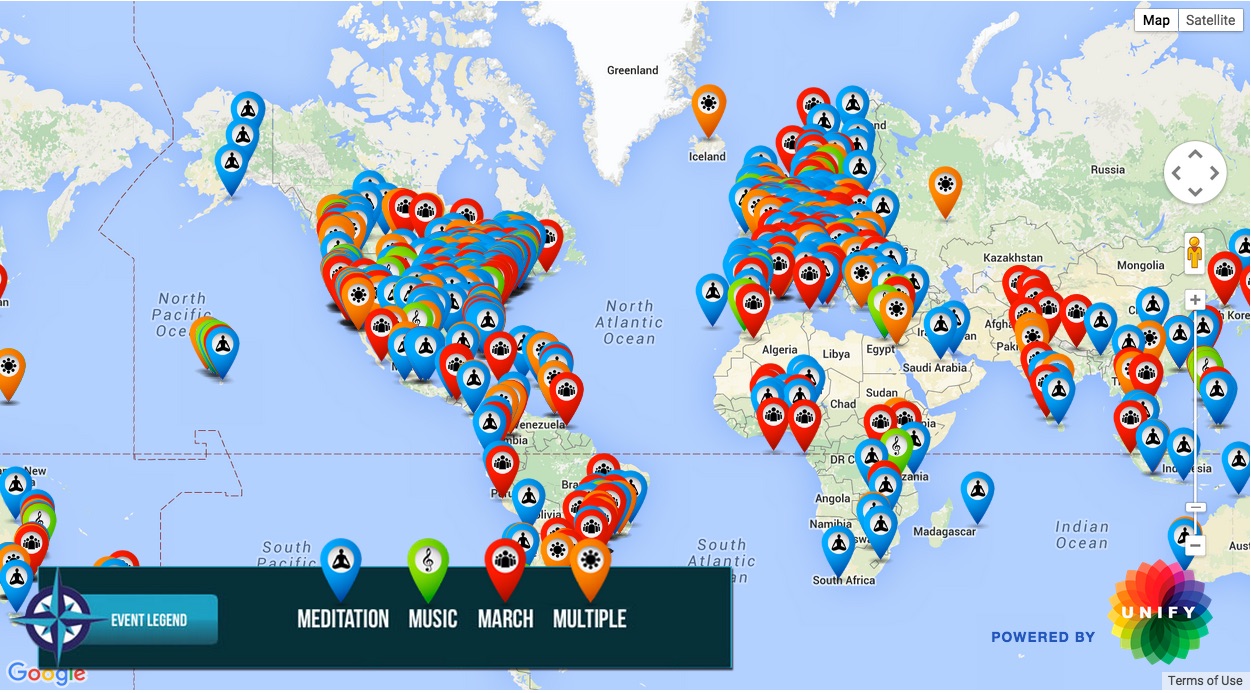
Trying to Survey Events around the World for the International Day of Peace

WOMEN’S EQUALITY

new women

Hundreds of women trade unionists gather for world conference in Vienna

FREE FLOW OF INFORMATION

colombia

Pact between the government and FARC-EP raises hopes for peace in Colombia

HUMAN RIGHTS

new Germany

Germany: PRO ASYL presents human rights award to U.S. AWOL soldier

SUSTAINABLE DEVELOPMENT

islamic

Islamic Declaration Turns Up Heat Ahead of Paris Climate Talks

DEMOCRATIC PARTICIPATION

stopwar

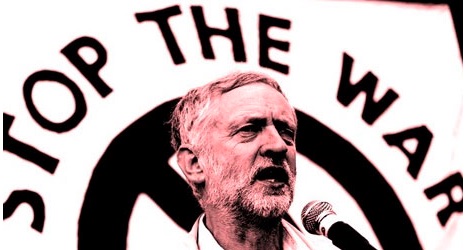
UK: Power to the Peaceful – Support Jeremy Corbyn – Join Stop the War

TOLERANCE AND SOLIDARITY

refugees

Is dropping more bombs on Syria way to solve refugee crisis?

EDUCATION FOR PEACE

Gilley

Music Builds Peace One Day at a Time

English bulletin September 1 2015

. COLOMBIA PREPARES FOR PEACE .

As the government of Colombia and the FARC enter their 40th cycle of peace talks, the people of Colombia are optimistic that an end is in sight to the half century of civil war that has torn their country apart and they are preparing for peace.

The peace talks reconvened August 20 in Havana with “a renewal of confidence in the peace process, spawned by the parties’  expressed willingness to accelerate the pace in Havana and to de-escalate the violence in Colombia.” Among their decisions in recent talks was the promise to create a truth commission. As the peace talks have advanced, the amount of violence has decreased according to a recent study by the United Nations.

As Amada Benevides explains in her letter to CPNN from Colombia, “The process of negotiating a peace agreement with the FARC has advanced many topics, including education for peace. For the first time in Colombia it is being mentioned explicitly, and not by other names, and in this sense we have several new initiatives . . . [including a] National Meeting on Education for Peace, to be held on 1 and 2 October.” She adds, “Since we have been working more than 15 years to put forward the necessity of peace education in Colombia, this is really a very exciting time.”

Peace education is becoming a required subject in the schools of Colombia. According to law 1732, adopted in 2014, the national government has decreed that “the teaching of Peace is regulated in all educational institutions of the country”. Culture of peace and sustainable development are to be implemented in the academic syllabus before December 31, 2015, in the areas of social sciences, history, geography, politics and democracy constitution, life sciences, environmental education, ethics, human values and principles.

There are many local and regional peace initiatives in the context of the talks between the government and FARC:

An important precedent over the years has been set by the Peace Community of San José de Apartadó, formally established in 1996, which has been able to resist involvement in the civil war by means of a vast array of nonviolent tactics ranging from public declarations to establishing alternative educational institutions and markets. This impressive tactical diversity has gained considerable international support and, to this day, helps sustain the Community’s resilience. 

In Cundinamarca a regional meeting was devoted to strengthening the national policy of coexistence and security in the issue of reconciliation. Jerome Gordillo, secretary of Government of Cundinamarca, said that is the responsibility of mayors and ombudsmen to efficiently handle the peace process.

In the city of San Agustin, the Faculty of Education of Surcolombiana University held the first International Biennial of education and culture of peace from 13 to August 15.

In Cartagena, the first regional meeting was held to construct a Caribbean Regional Peace Assembly. The meeting was supported by the workers’ labor union -USO- and the company Ecopetrol. It was attended by delegates from Atlantico, Bolivar, Sucre, Córdoba, Cesar and Guajira.

In Bogota, more than 350,000 people attended the Rock in the Park Festival which was dedicated this year to the culture of peace.

At a national level, the Second National Assembly for Peace will take place in November. It will will include four conversations and 10 regional assemblies which will take place in Antioquia, Barrancabermeja, Cartagena, Choco, Villavicencio, Neiva, Puerto Asis, Tibu, Arauca and Popayan. They will focus on three themes: 1) mining and energy policy; 2) regional development and peacebuilding and 3), culture of peace and followup to the peace accords.

In many remote regions in Colombia, radio is the only medium to which people have access. For this reason, the Office of the High Commissioner for Peace this year began training journalists and announcers working at hundreds of small community radio stations across the country to manage programs that bring citizens in touch with the ongoing peace process.

In sum, the people of Colombia are preparing for peace at all levels, providing us lessons for the eventual transition from the global culture of war to a culture of peace.


FREE FLOW OF INFORMATION

benavides

Letter from Colombia

WOMEN’S EQUALITY


To Hell and Back: How Rwanda’s Women Helped It Become a World Leader

DISARMAMENT AND SECURITY


ICRC re Arms Trade Treaty: We must stop irresponsible arms trade or transfers

HUMAN RIGHTS


UN: Worldwide displacement hits all-time high as war and persecution increase

SUSTAINABLE DEVELOPMENT


UN: Consensus Reached on New Sustainable Development Agenda to be adopted by World Leaders in September

DEMOCRATIC PARTICIPATION


Côte d’Ivoire: REPSFECO-CI promotes a peaceful electoral process

TOLERANCE AND SOLIDARITY


A gathering of young peace-builders towards a strengthened policy framework on Youth, Peace and Security

EDUCATION FOR PEACE


Colombia: Rock in the Park 2015 – Music for the 21st Century

Bulletin English August 1, 2015

NEEDED: POLITICAL WILL IN PARIS .

Three years ago, the nations of the world met at Rio to address the challenge of climate change, and they failed to come to an agreement. At that time we wrote “The events surrounding Rio+20 last month, the huge meeting of governments that was called together by the United Nations, can be seen as a window into history as it is occurring. The nation-states are failing and new institutional frameworks are growing up to take their place.”

Once again, at the end of this year, the nations of the world will meet to address the same problem, this time in Paris. And this time there will be even more pressure on them from other institutional frameworks.

This month 60 mayors from the world’s largest cities, many of them from ICLEI, the global organization of mayors for sustainability, met with the Pope. They demanded “a bold climate agreement that confines global warming to a limit safe for humanity.”

Earlier in the month, 22 representatives from states and regions in North and South America (with the notable absence of national government representatives) met in Canada and signed an agreement to: support carbon pricing; ensure public reporting, take action in key sectors and meet existing greenhouse gas reduction agreements. One commentator called it “a new sense of empowerment & collaboration from sub-nationals across the continent.”

In May, the mayor of Paris, Anne Hidalgo invited 18 mayors from Africa as part of an approach to gather as many stakeholders as possible together to reach consensus before the U.N. summit. With Ignazio Marino, the mayor of Rome, Italy, she also invited mayors of the “capitals and big towns” of the 28 member states of the European Union to a gathering in March. The mayors, representing some 60 million inhabitants, stressed that the “fight against climate change is a priority for our towns and the well-being of our citizens.”

Hidalgo’s office is now working on a project to have 1,000 mayors from around the world present at COP 21, a spokesperson told IPS. The stakes are high because the French government wants the summit to be a success, with a new global agreement on combating climate change.

In May, voters in the oil-rich province of Alberta, Canada overturned the incumbent party in an election marked by opposition to the government’s support of oil companies and their destruction of the environment. The challengers won with a promise to establish tougher policies against climate change.

In April, climate justice advocates, community peoples and mass movements’ representatives met in Maputo, Mozambique to consider the roots, manifestations and impacts of climate change on Africa and to consider needed responses to the crises. They issued a radical declaration that concluded “Conference participants resolved to work with other movements in Africa and globally for the overturning of the capitalist patriarchal system promoted and protected by the global financial institutions, corporations and the global elite to secure the survival of humans and the rights of Mother Earth to maintain her natural cycles.”

It has become increasingly clear that a solution to the problem of global warming is not a technical problem, but rather a political problem. The means are available. It is only the political will that is lacking.

In May, MITEI, the authoritative Energy Initiative of Massachusetts Institute of Technology issued a report stating that solar energy can meet humanity’s future long-term energy needs while cutting greenhouse gas emissions – but to realize this potential will require increased emphasis on developing lower-cost technologies and more effective deployment policy.

At the same time, the Earth Policy Institute published “Seven Surprising Realities Behind The Great Transition to Renewable Energy” showing that the global transition to clean, renewable energy and away from nuclear and fossils is well under way. Their “seven surprising realities:”

1. Solar is now so cheap that global adoption appears unstoppable.

2. Wind power adoption is rapidly altering energy portfolios around the world.

3. National and subnational energy policies are promoting renewables, and many geographies are considering a price on carbon.

4. The financial sector is embracing renewables – and starting to turn against fossils and nuclear.

5. Coal use is in decline in the United States and will likely fall at the global level far sooner than once thought possible.

6. Transportation will move away from oil as electric vehicle fleets expand rapidly and bike- and car-sharing spreads.

7. Nuclear is on the rocks thanks to rising costs and widespread safety concerns.

It is only the political will that is lacking. Will it be there in Paris?

      
SUSTAINABLE DEVELOPMENT

climate
Landmark Climate Statement Signed in Ontario

WOMEN’S EQUALITY


Egypt: Women’s Voices Initiative for the Local Councils

DISARMAMENT AND SECURITY


United Cypriot economy to focus on shipping, tourism, education

HUMAN RIGHTS


Protecting Schools 80 Years After Roerich

FREE FLOW OF INFORMATION


NGO Open letter on the Selection Process of the UN Secretary-General

DEMOCRATIC PARTICIPATION


On Mandela Day, UN joins call to promote community service

TOLERANCE AND SOLIDARITY


Dakar to host July conference on Islam, peace

EDUCATION FOR PEACE


Bolivia: Mediators are formed in culture of peace

Bulletin English July 1, 2015

. CONFRONTING TERRORISM WITHOUT VIOLENCE .

The commercial mass media, always eager for headlines of violence, is having a good time telling us about all the atrocities committed by Boko Haram and the Islamic State, which have inherited their mantles from Al Queda. They give us the impression that we have found the new enemy and we have no choice but to go to war. They don’t give much priority to non-military approaches to counter the terrorism. However, such approaches do exist, as we see this month in the articles of CPNN.

Let us begin with the comprehensive strategy for “A Cultural Program to Reject Extremism and Violence” by Ismail Serageldin. It is not an abstract academic proposal but is based on the extensive experience of the organization he heads, the Bibliotheca Alexandrina in Egypt. He provides us with “seeds of hope” for a Cultural Transformation in the Arab World as an alternative to the fanaticism and “barbaric terrorism being displayed by the forces of the so-called “Islamic State” in Iraq and Syria.

According to the Elders, “There is no other option but to use the military option, but at the same time it is always important to understand that military operations can never succeed in dealing with these kinds of forces unless and until a good social and political strategy is implemented in the areas where these forces are not active” If force must be used it must be “after a political and social agenda has been constructed on what to do thereafter.”

While calling for nonviolent approaches, the Elders are clear that past military interventions have been a major cause for the increased terrorism we see in recent years. According to Elder Mary Robinson, “I think a lot of the problems stem from an unjustified and incredibly damaging war in Iraq. It humiliated, the “shock and awe”, the whole sense of it, and then, I think, it broke a trust somehow which is going to be very hard to rebuild.”

Serageldin is very clear that as a major cause of the rise of the terrorist Islamic State, “the American invasion of Iraq in 2003 and the subsequent mismanagement of the tense ethnic and religious cleavages in that society dealt a traumatic blow to the self-confidence of Muslims, who viewed the direct invasion by America and its allies of both Iraq and Afghanistan, as a direct humiliation of Muslims by the West. Furthermore, the systematic murder of civilians by the use of drones in Pakistan, Afghanistan, Yemen and elsewhere; all served to inflame sentiments of victimization that fed the Muslim majorities’ emotional despair.”

According to the peacebuilding specialist John Paul Lederach, what is needed is a policy of nonviolent engagement with the people in the groups that have been labeled as terrorists, rather than a policy of isolation. For example, we should be engaged with the women of Syria, at the heart of the region that is being terrorized, who are courageously promoting a culture of peace by stopping child marriage, uniting refugees and host communities, policing the streets, listening to marginalized groups, reopening schools, helping families survive, reforming corrupt courts, vaccinating children, disarming youth and mobilizing a movement for peace. A good example of engagement is the work of the Nonviolent Peaceforce, as described in their “Urgent Update from South Sudan.”

The Foreign Minister of Sierra Leone provides a voice of wisdom in her address to the Organization of the Islamic Conference. Faced with an “an increasing wave of terrorist insurgencies and unrests across the globe”, “we must endeavour to undertake initiatives ranging from humanitarian activities to mediation with a view to nurturing and promoting the culture of peace and tolerance among peoples.”

And in Benin, the conference for a “general mobilization against the danger of Boko Haram” concluded that ““Military force will not be enough to annihilate the jihadist movement.” Instead what is needed is “trust between followers of different religions to build together a better society with development and peace and to mobilize the enthusiasm around concrete tasks whose priority is recognized by all.”

      
TOLERANCE AND SOLIDARITY

benin
Benin encourages interfaith dialogue against Boko Haram

WOMEN’S EQUALITY


Argentina: Massive march against gender violence in front of the Congress

DISARMAMENT AND SECURITY


Gaza prepares to welcome Freedom Flotilla III

HUMAN RIGHTS


Truth and Reconciliation Commission: Canada guilty of cultural genocide against Indigenous peoples

FREE FLOW OF INFORMATION


Colombia: FARC and the Government Will Create a Truth Commission

DEMOCRATIC PARTICIPATION


The Challenge: A Cultural Program to Reject Extremism and Violence

SUSTAINABLE DEVELOPMENT


FAO: World hunger falls to under 800 million, eradication is next goal

EDUCATION FOR PEACE


Colombia: Teaching peace

Bulletin English June 1 2015

. MOVEMENTS FOR FOOD SOVEREIGNTY .

This month we feature articles about the peasant movement for food sovereignty, beginning with the Sixth Congress of the Latin American Coordination of Rural Organizations-Via Campesina (CLOC-VC) that took place in Argentina. After a week of debates in workshops and assemblies, more than a thousand delegates from across Latin America and the Caribbean, together with delegates from Africa, Asia and Europe, agreed to defend “Food Sovereignty supported by the realization of a Comprehensive and Popular Agrarian Reform (which) gives us back the joy of taking care of Mother Earth and producing the food that our people and humanity needs to ensure its development.”

Here is a quotation from their final declaration:

“CLOC is the flame, the light and the actions of Via Campesina in Latin America. We emerged from the heart itself of the 500-year process of indigenous, peasant, black and popular resistance, which gathered the historical peasant movement and the new movements emerging as a response to the dismantling processes imposed by neoliberal policies. We gather strength, experience and struggles and we build proposals according to the new political moments, highlighting that the agrarian issues are relevant for the society as a whole, and as such, we need to face it with an alternative and popular power strategy.”

Despite the fact that small farmers (peasants) produce most of the food consumed by humanity, they are threatened by industrial farming and multinational companies that are trying to impose monoculture production for export and a monopoly on seeds, both of which are supported by government laws and subventions, increasingly on an international level.

A particularly eloquent advocate for the small farmer is Vandana Shiva from India, as we see from an interview with her in Switzerland: “The reasons farms are becoming fewer and larger is a highly twisted economy that punishes small farmers and rewards industrial agriculture. One reward is the $400 billion in global subsidies for large-scale farms. The other reward is that every step of law-making, such as regulations concerning standardisation of food, retail chains, and intellectual property laws, puts a huge burden on small farmers. For 10,000 years small farmers have done the job. Why only in this century has small farming become unviable? It is because the trade-driven, corporate-driven economic model for agriculture has been designed for large-scale farming. It has been designed to wipe out small farms. Around 70% of the food eaten globally today is produced by small farms. Small farms produce more and yet there is mythology that large scale farming is the answer to hunger”

Small farmers (peasants) are increasingly mobilizing around the world. In Guatemala, for example, there is a strong peasant movement to support a Rural Integral Development law which would oblige the state to assist people living in rural areas. The campesinos have continued to keep the pressure on the government to provide a solution by holding regular protests, blocking highways, and occupying space in Guatemala City, demanding that the government pass the law.

The so-called free-trade treaties, being negotiated at an international level by the most powerful countries, include institutionalized support for industrial agriculture at the expense of small farming, and for this reason these treaties are being opposed by peasant movements. They have designated April 17 as the International Day of Peasant Struggle against Transnational Companies and Free Trade Agreements. Among their actions are land occupations, seed exchanges, street demonstrations, food sovereignty fairs, cultural events, lobby tours and debates.

Seed exchanges are important because a few Transnational Companies such as Monsanto are trying to establish global monopolies on seeds. In Uruguay, the 7th National Meeting of Producers of Creole Seeds and the 6th National Festival of the Creole Seed and family farming, met under the slogan “Native seeds and the land as the heritage of peoples in the service of humanity.” Other examples of resistance by small farmers against seed monopolies are cited from Ghana, Mozambique, Niger, Brazil, Chile, Colombia, Costa Rica, Mexico, Venezuela, India, Philippines, South Korea, Thailand, Austria, France, Germany, Greece and Italy. In several of these countries, as well as Burkina Faso, Australia, Puerto Rico, Holland and Argentina there were demonstrations specifically against Monsanto on May 23.

Despite the fact that they are governed by the countries that support industrial agriculture, the relevant organizations of the United Nations, have recently met to sound the alarm against the destruction of small farms. According to the Food and Agriculture Organization, ““Despite significant rural to urban migration, extreme poverty is becoming more concentrated in rural areas, where there are lower levels of public and private investments, poorer infrastructure and fewer services targeted to the most vulnerable. Growth in agriculture is more effective in reducing poverty than growth in other sectors. We need more and better investment in agriculture.”

And according to the International Fund for Agricultural Development,  “Most of the food that people are consuming around the world comes from smallholder farms. They are not the problem, but part of the solution. We see the need of smallholder farmers to have access to markets and to have access to credit.”

Despite the advantages enjoyed by industrial agriculture, many young people in Europe and North America as well as in the South are returning to small farming. To understand their motivation, we carry an interview in CPNN this month with one such young farmer from France.

      
SUSTAINABLE DEVELOPMENT

argentina
Argentina: CLOC-VC congress for supported food sovereign

WOMEN’S EQUALITY


A Century of Women Working for Peace

DISARMAMENT AND SECURITY


US Kills Nuclear-Free Mideast Conference, Citing Israel

HUMAN RIGHTS


5 brave ways activists are fighting for LGBTI rights worldwide

FREE FLOW OF INFORMATION


6 simple tools to protect your online privacy (and help you fight back against mass surveillance)

DEMOCRATIC PARTICIPATION


Women in Parliament: 20 years in review

TOLERANCE AND SOLIDARITY


Inter-institutional link to promote a culture of peace between Ecuador and Peru

EDUCATION FOR PEACE


Education awards go to Iraqi and Filipino leaders