Tag Archives: english bulletin

English bulletin January 1, 2017

. . . REVIEWING 2016 . . .

Despite the deterioration of national politics as we leave the year 2016, we continue to see progress towards a culture of peace in the areas we have featured each month in our bulletins.

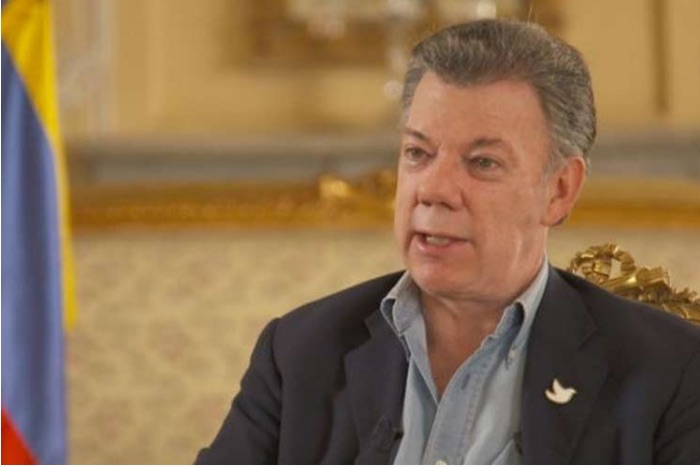
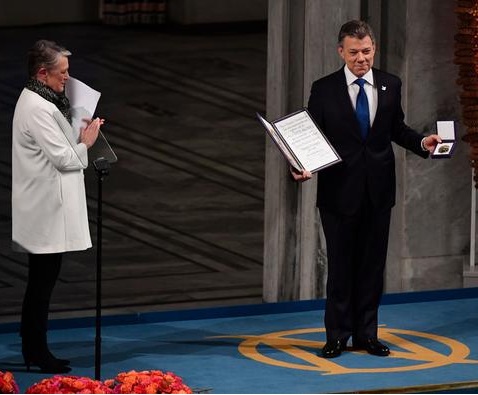
The biggest news in 2016 was the peace agreement in Colombia that ended half a century of civil war. This was featured in our JULY BULLETIN. Last month we featured words from the lecture by Colombian President Santos on receiving the Nobel Peace Prize: “With this agreement, we can say that the American continent – from Alaska to Patagonia – is a land in peace. And we can now ask the bold question: if war can come to an end in one hemisphere, why not one day in both hemispheres? Perhaps more than ever before, we can now dare to imagine a world without war. . . . We must replace the culture of violence with a culture of peace and coexistence; we must change the culture of exclusion into a culture of inclusion and tolerance.”

Of course, the development of a culture of peace requires much more than the end of the civil war. What is required in Colombia is “territorial peace” such as that beginning in the Colombian departments of Magdalena Centro, Cesar, Valle de Cauca and Antioquia, feaured in the DECEMBER BULLETIN. According to the most recent article on territorial peace in Colombia, “what is at issue is to build and / or strengthen a Social and Democratic State at all levels of national life and in all corners of the country. This requires a strong civil society, with high levels of organization and public involvement, that is to say, an active citizenship.”

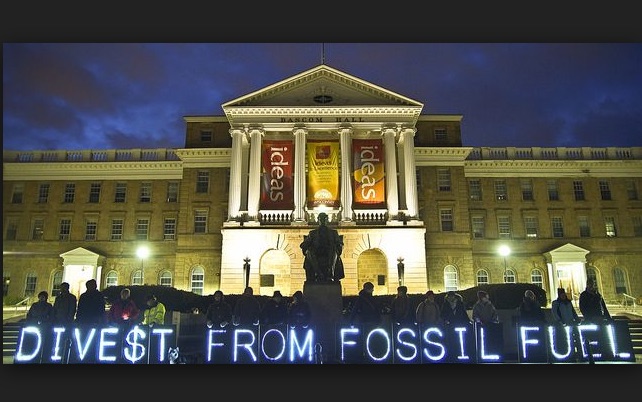
Despite the fact that the countries that took part in the UN conference on the environment failed to address the continued reliance on fossil fuels, as we discussed in the JANUARY BULLETIN, there continues to be progress on other fronts. Increasingly we find that civil society institutions are divesting from the business of fossil fuel, with the last news indicating $5 trillion of divestment. In this regard, Nobel laureates and scientists have called on the Nobel Prize Foundation to set a good example by divesting from fossil fuels. And we found in the NOVEMBER BULLETIN that renewable energy is beginning to overtake fossil fuels, beginning with the generation of electricity. The most recent news in this regard indicates that 47 of the world’s poorest nations have pledged to skip fossil fuels altogether and jump straight to using 100 percent renewable energy instead.

The second international conference on the culture of peace in Africa was hosted in December by Angola. This continues the work for a culture of peace in Africa that we remarked in the BULLETIN OF MARCH, with articles from the African Union as well as Senegal, Tunisia, Cameroon, Morocco, Malia, Ethiopia, Congo, Sierra Leone, the Gambia, South Africa and Chad.

Recently we reported on a meeting between representatives of the Peace Commissions of New Haven (USA) and Santos (Brazil). This continues the progress of cities towards a culture of peace that we covered in the BULLETINS of APRIL and SEPTEMBER, including news from Mayors for Peace, International Cities of Peace and a new network of Nonviolent Cities.

In the OCTOBER BULLETIN, we surveyed activities around the world for the International Day of Peace. We found 182 events in 85 countries from every region: USA/Canada, Latin America/Caribbean, Western Europe, Africa, Arab States, Russia/Ukraine, and Asia/Pacific. The largest number of events involved children, especially schoolchildren. The celebration was especially intense in some of most conflictual regions of the world, such as the Ukraine, Kashmir/India/Pakistan, and Colombia/Venezuela. And to this list we added the United States.

In the JUNE BULLETIN, we considered proposals to reform the United Nations. One of the proposals was reform of the process to choose the Secretary-General and to increase the leadership of women. Recently, the new Secretary-General, António Guterres, was elected by a process with increased transparency, and he is appointing a number of women to high posts.

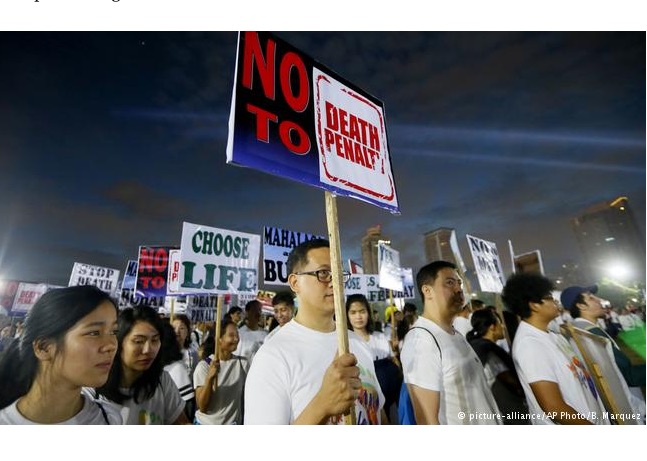
Nonviolence, as considered in our MAY BULLETIN, is one of the key methods of a culture of peace. Highlights of nonviolent movements from 2016 include photos from South Korea, Brazil, Malaysia and the United States. And most recently, Pope Francis issued his annual peace message on the theme, Nonviolence: A style of politics for peace. He urges people everywhere to practice active nonviolence and notes that the “decisive and consistent practice of nonviolence has produced impressive results.”

Another key method is peace education. El Salvador is now in discussions to include culture of peace in national educational curriculum. In the AUGUST BULLETIN, we covered peace education articles reprinted by the Global Campaign for Peace Education from Myanmar, Bosnia, United Kingdom, Rwanda, Georgia, United States and the Seychelles.

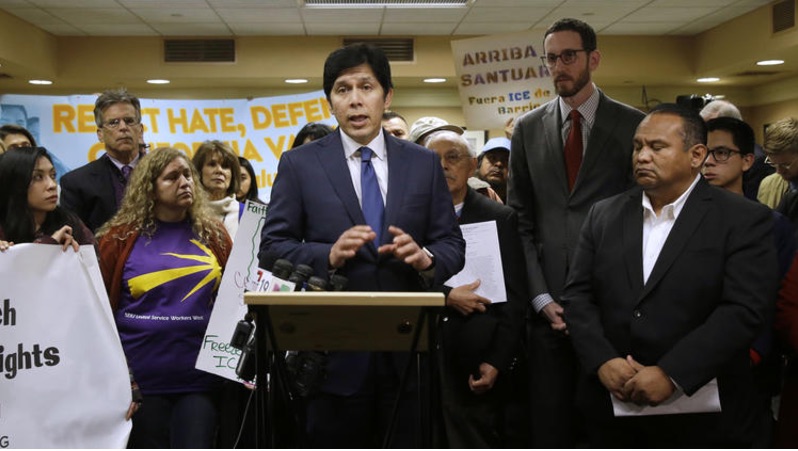
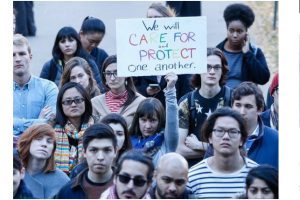
Finally, we arrive at the fightback folowing the election of President Trump in the United States. The movements for sanctuary cities and sanctuary campuses were featured in the DECEMBER BULLETIN. Since then, we add the specific resolution of the city of San Francisco, as well as sanctuary churches in New York and Minnesota.

La lucha continua! The fight continues!


HUMAN RIGHTS


San Francisco’s Official Response to the Election of Trump

WOMEN’S EQUALITY


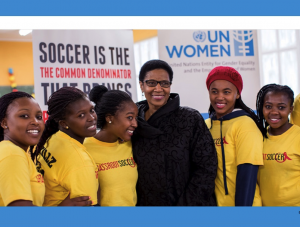
UN Women: 16 days of activism against gender violence

DEMOCRATIC PARTICIPATION


Colombia: The Challenge of Territorial Peace

SUSTAINABLE DEVELOPMENT


REPORT: Fossil Fuel Divestment Doubles in Size as Institutions Representing $5 Trillion Commit to Divest

TOLERANCE AND SOLIDARITY


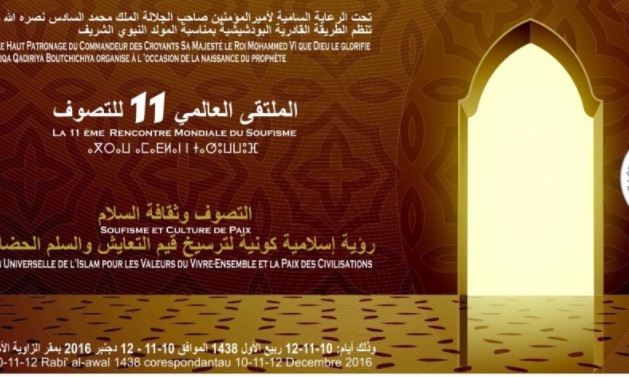
Morocco: Madagh hosts eleventh World Meeting of Sufism

FREE FLOW OF INFORMATION


Nobel Lecture by Juan Manuel Santos:”Peace in Colombia: From the Impossible to the Possible”

DISARMAMENT AND SECURITY


Building on gender promise, Guterres names three women to top UN posts

EDUCATION FOR PEACE


El Salvador: Discussions to include culture of peace in national educational curriculum

English bulletin December 1, 2016

ELECTIONS – WHAT COMES NEXT ?

We’ve seen two shocking election results recently: the defeat of the referendum for the peace accords in Colombia, and the election of Donald Trump in the USA based on a racist and xenophobic campaign. What does it mean?

It means that voters in the two countries are alienated from their governments – quite simply, they do not trust the government. And they are angry.

So what comes next? Do we slide back into war or into fascism? Or do we return to the people, listen to their fears and anger, and organize them in the sense that Martin Luther King told us?: “The supreme task is to organize and unite people so that their anger becomes a transforming force.

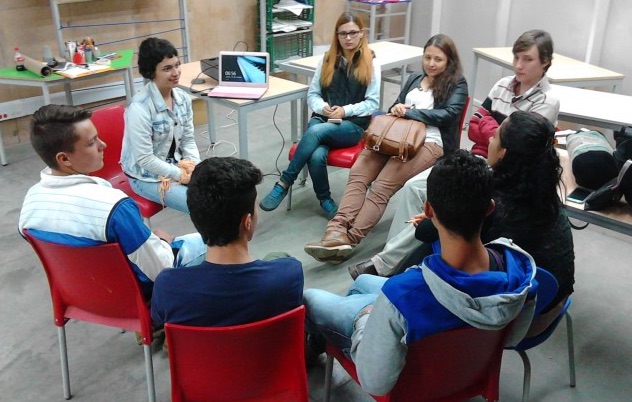
CPNN, this month, finds ample evidence that the fightback to defend peace and human rights is underway in both countries. It begins at the local level, as it must be if it is to be sustainable. And it is being led by young people, as it must be if it is to have the energy to succeed.

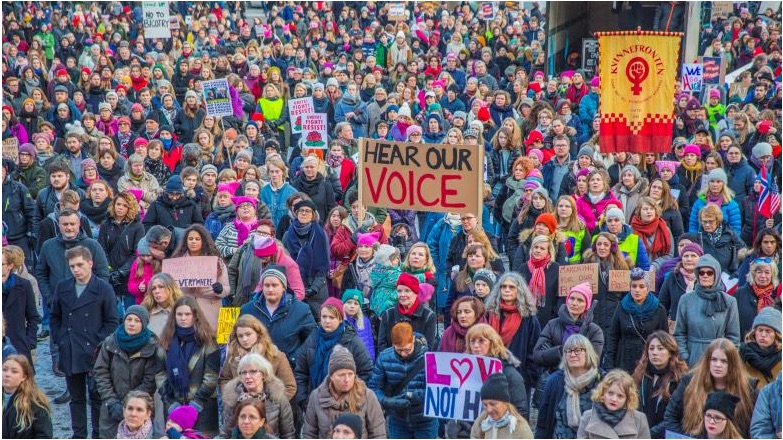
Already, there are plans for a massive march of women to take place in Washington on the day after the inauguration. We “will send a bold message to our new administration on their first day in office, and to the world that women’s rights are human rights. We stand together, recognizing that defending the most marginalized among us is defending all of us.”

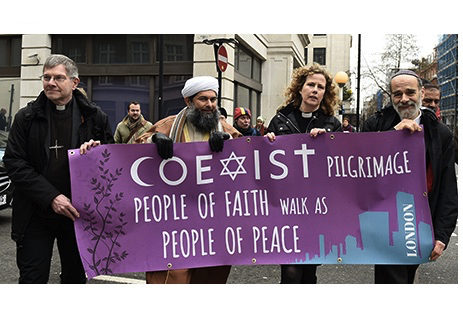
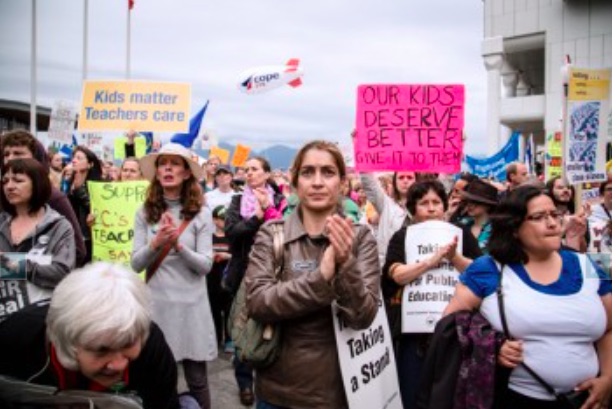
Thousands of students have staged walk-outs on college campuses across the United States, signalling their commitment to maintain “sanctuary campuses” to protect immigrant students. At the same time, the mayors of the largest American cities have pledged to maintain their policy of refusing to work with federal deportations These include Boston, Chicago, Los Angeles and New York. Not to mention entire states that are part of the sanctuary movement, including California and New York.

If you are out on the street talking to people, there is a new sense of urgency and commitment to get involved. “We’ve got a lot more work to do, now that Trump has been elected . . . more than ever, we need to work together for peace.”

People, especially youth, are training in methods of nonviolence, realizing that they will be put to the test in the coming times. For example, in Tucson, Arizona, students are taking the Kingian Nonviolence training program, which aims to “institutionalize and internationalize nonviolence.”

In Colombia, young people are training “to build capacities and to form ‘ Leaders animators’ in the territory who can then promote a political culture of pardon and reconciliation.” Also, there is the development of Municipal Peace Councils, the Municipal Councils of Transitional Justice . . . to form the network of peacebuilding strategy at the municipal level.” This month, CPNN articles about these initiatives come from the Colombian departments of Magdalena Centro, Cesar, Valle de Cauca and Antioquia, some of the most populous of Colombia’s 32 deparments.

Traditional peace and justice organizations, such as Search for Common Ground, Pace e Bene, Nonviolent Peaceforce and American Civil Liberties Union are deeply involved. But the energy is coming from young people to an extent that we have not seen since the revoluionary 60’s. It is they who will determine the direction and the power of the movement.


HUMAN RIGHTS

sanctuary-campuses

USA: ‘Sanctuary campus’ protests demand universities protect immigrants

WOMEN’S EQUALITY


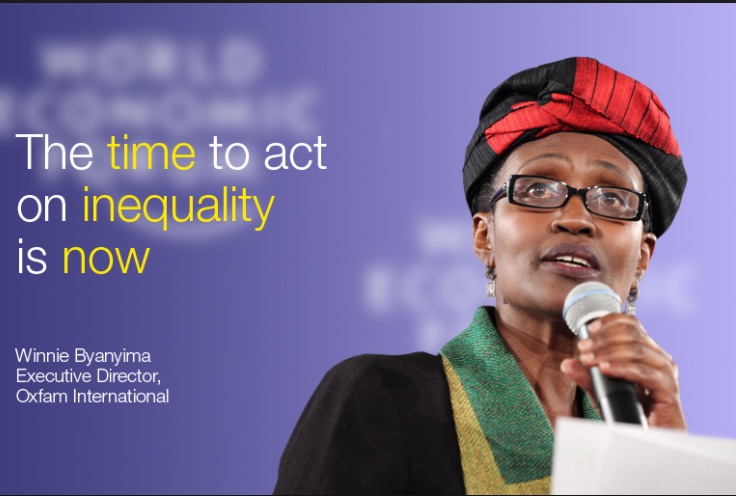
Enough is enough: Oxfam seeks to end violence against women and girls once and for all

DEMOCRATIC PARTICIPATION


Tabling for peace in the USA: A new sense of urgency

SUSTAINABLE DEVELOPMENT

renewable

47 of the world’s poorest countries are aiming to hit 100% renewable energy

TOLERANCE AND SOLIDARITY


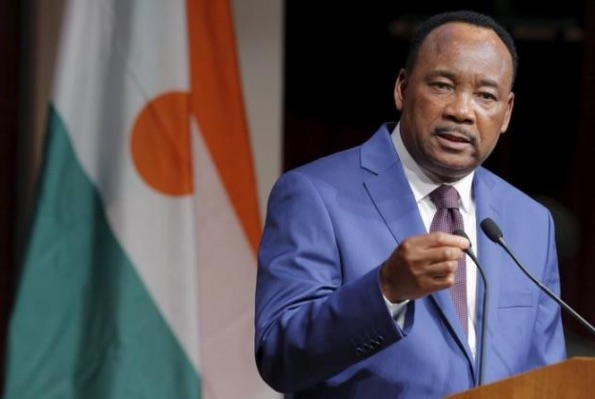
Niger: Niamey opens a forum on the culture of peace through religious dialogue in the subregion

FREE FLOW OF INFORMATION


Antioquia, Colombia: Young people united by a Territorial Peace!

DISARMAMENT AND SECURITY


The International Society Culture of Peace: Solidarity concerts in Athens and Mytilini / Lesbos

EDUCATION FOR PEACE


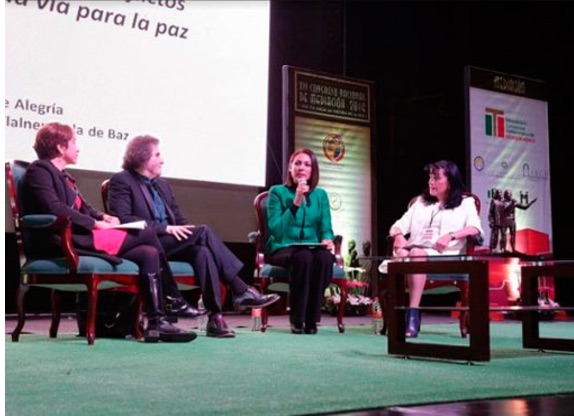
Mexico: Sixteenth National Congress of Mediation inaugurated in Tlalnepantla

English bulletin November 1, 2016

RENEWABLE ENERGY IS ON THE MOVE!

Renewable sources of electricity overtook coal last year to become the largest source of installed capacity in the world, according to the International Energy Agency.

A recent graph is spectacular showing how the cost of solar energy has come down while the volume deployed has gone up. In 1975 a silicon solar energy module cost over $50 per watt, while now it is less than $1 per watt. The milliwatts installed have risen from 1 to 115,000! Since 2000 the deployment of solar has doubled seven times.

And the trend promises to continue. Dubai recently received a bid for solar installations that would produce electricity at 3 cents per kilowatt hour, four times less than the average price paid for residential electricity in the United States. And the Middle East is not alone. Projects with similar low rates are reported from Mexico and China.

Last year, for the first time, global investment in renewable energy surpassed investment in fossil fuels. This year’s graph shows $286 billion dollar investment in renewable energy (mostly solar panels and wind mills) compared to $130 billion for fossil fuels. Developing as well as developed countries are involved, including China (over $100 billion), India (over $10 billion), South Africa, Mexico, Chile, Morocco, Turkey and Uruguay (all over $1 billion).

To some extent the change is simply driven by the profit motive of investors. Presumably that is the case for the great investment by China. The Chinese are not only making the largest investment in the world (by far!) but they are advancing renewable energy in other regions besides their own, for example, in Latin America.

At the same time, sometimes the investment comes from small startup companies such as the Spanish Renewable Energy Cooperative
Also the change is due to political decisions of investors. For example, Roman Catholic institutions around the world have recently decided to divest from fossil fuel extraction, joining a large list of religious institutions that have made the same decision.

In some cases, the political decision is national. Switzerland has just adopted a new law which phases out nuclear power and puts the emphasis on cutting energy consumption and increasing the production of renewable energy. The generation of non-hydro renewable power is to grow from 1.7 TWh last year to 11.4 TWh by 2035 (nearly tenfold).

Cities are also involved. This is especially important since, according to the International Renewable Energy Association, cities accounting for 65 per cent of global energy use and 70 per cent of man-made carbon emissions. In the United States, Boulder, Colorado, announced that the community will move to 100% renewable electricity by 2030, while Utah’s Park City has committed to to the same target by 2032. Meanwhile, Los Angeles’ City Council has directed its staff to develop a plan for 100% renewable energy.

There are some surprising technical advances involved in the shift to renewable energy. For example, the government of France has decided to invest in 1000 kilometers of autoroutes composed of solar panels!

Despite the fact that the climate accord negotiated by the Member States of the UN in Paris does not promise to solve the problem of global warming, the growing progress in renewable energy may ultimately solve much of the problem.


SUSTAINABLE DEVELOPMENT

renewable

Urban leadership in the US for renewable energy

WOMEN’S EQUALITY


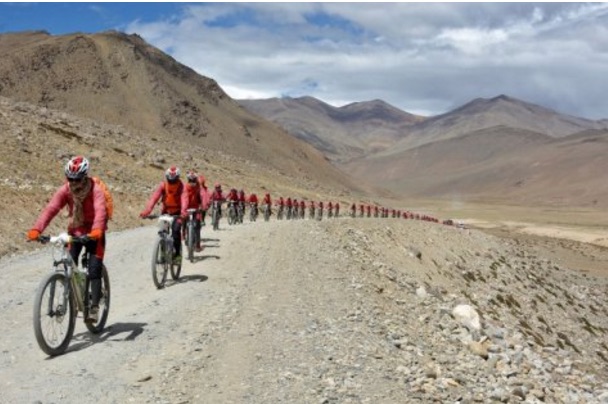
India: Buddhist nuns bike Himalayas to oppose human trafficking

DEMOCRATIC PARTICIPATION


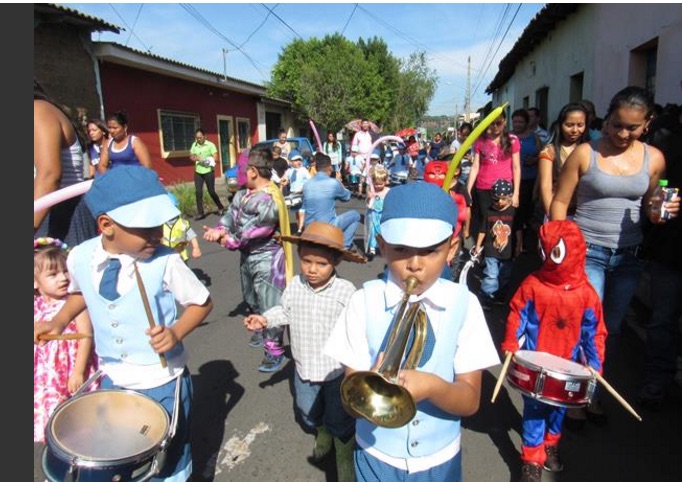
El Salvador: March rejects ongoing violence and calls for a culture of peace

HUMAN RIGHTS


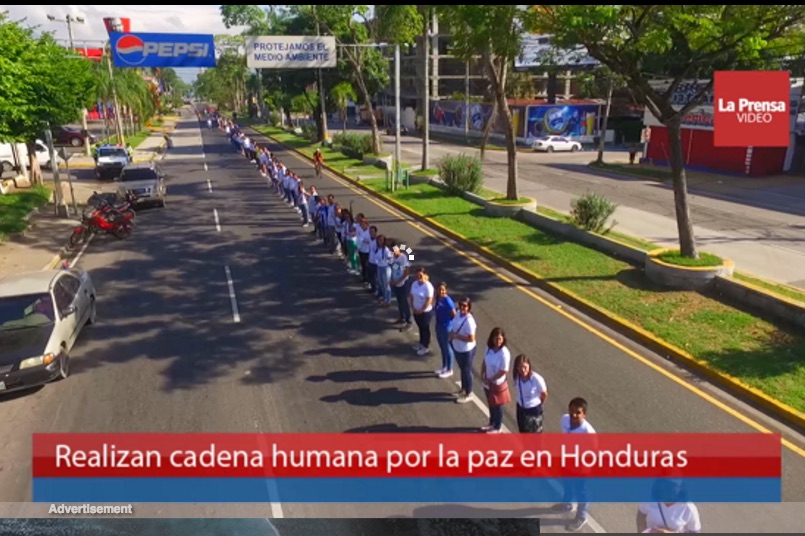
40,000 Create Human Chains to Protest Violence in Honduras

TOLERANCE AND SOLIDARITY


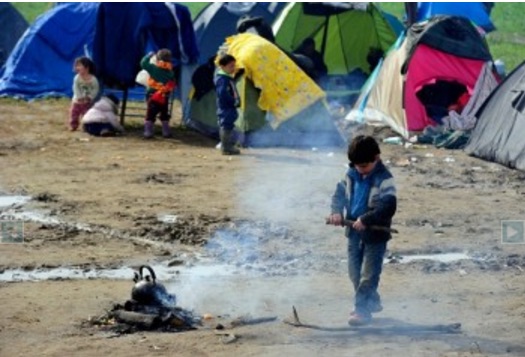
Greece: Union pushes for access to education for all refugee children

FREE FLOW OF INFORMATION


Goma, Democratic Republic of Congo: The commemoration of the International Day of Peace

DISARMAMENT AND SECURITY


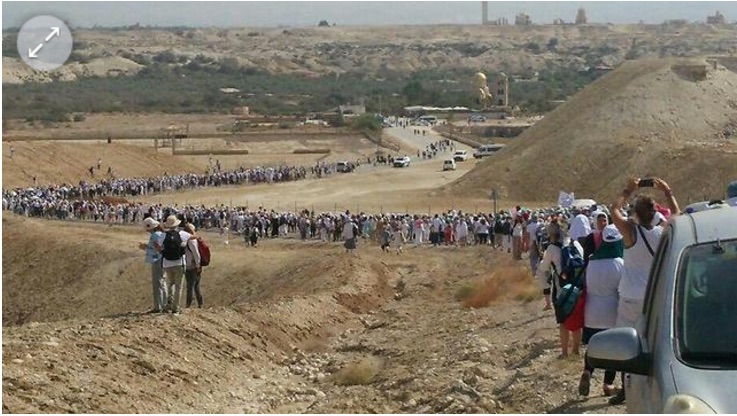
March of Hope gathers 20,000 in historic Jerusalem rally

EDUCATION FOR PEACE


From pacifism to nonviolence in Berlin

English bulletin October 1, 2016

. . . PEACE DAY 2016 . . .

There are indications that millions of people took part in this year’s International Day of Peace. For example, in the United States, Campaign Nonviolence mobilized more than 600 actions in all 50 states. Last year, according to Peace One Day “an estimated 1.5 billion people were exposed to Peace Day messages through activities ranging from dances to media campaigns.”

These mobilizations carry on an important tradition. At the beginning of this century, UNESCO and the United Nations mobilized 75 million people to sign the “Manifesto 2000” as part of the International Year for the Culture of Peace with the greatest number of signatures in India, Brazil, Colombia and South Korea. In 2005 and again in 2010, there was a mobilization for the UN International Decade for a Culture of Peace and we published reports from a thousand civil society organizations around the globe.

In recent years, the most universal mobilization for peace has been carried out at the local and national level for the International Day of Peace, September 21. During the International Peace Decade, detailed reports were gathered and published by the NGO Pathways to Peace. Their annual report in 2009 described 700+ events. However, in recent years, we have complained that there has not been an adequate survey of its global scope. of Peace Day events.

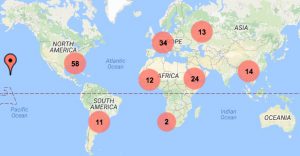
Therefore, this year CPNN has undertaken such a survey, using the International Day of Peace as the key word for a search in Google News during the week before and after 21 September, and by searching in a wide range of languages, including English, French, Spanish, Russian, Arabic, Ukrainian, Portuguese, Italian, and German. We have come up with 182 events in 85 countries.

Looking at the maps generated by this survey, we may remark the following:

1) The celebration is universal. The maps are filled from every region: USA/Canada, Latin America/Caribbean, Western Europe, Africa, Arab States, Russia/Ukraine, and Asia/Pacific. Gaps, such as Scandinavia and Eastern Europe can be explained by our failure to enlarge the search to include all of the national languages in these regions, not to mention the many national languages in Asia.

2) The celebration is especially intense in some of most conflictual regions of the world, such as the Ukraine, Kashmir/India/Pakistan, and Colombia/Venezuela. To this list we may add the United States.

Looking at the events listed from the Ukraine, one is struck by the fact that there is a more or less equal number of celebrations reported in the national language (from the western part of the country) and in Russian (from the eastern part of the country). Many of the articles describe a longing for the shared peace that they had in the past and have lost following the installation of a right-wing government in recent years. For example, from the Lutsk gymnasium №4z in the West Ukraine: “Previously, the streets of our country were peaceful, but the events today in the east of our country are effecting everyone, including students and teachers.” From Kovelchany “Now the concept of peace is more than ever important for our country.” And from Dnipropetrovsk in the East Ukraine: “Every day we help peaceful people affected by the war – displaced and wounded. This is the reality of peace and unity in our country today”

Looking at the events listed for Peace Day from India and Pakistan concerning Kashmir, we find references to recent bloodshed. From Mirpur, Pakistan : “The participants strongly condemned the increased human rights abuses by the Indian occupational forces in occupied Jammu & Kashmir.” And from Doraha, India “The volunteers condemned the attack on Indian soldiers at Uri Brigade Headquarters.”

The news is good from Colombia. . So it is not surprising that there are many positive celebrations of the Day of Peace associated in this country that is emerging from a half century of civil war. For example, in Tunja, Boyaca, Colombia : “To commemorate the international day of peace, the biggest event took place in San Pablo de Borbur where at least 300 young leaders from 14 to 28 years old met to share experiences during the First Meeting of Youth for Peace of Western Boyaca. They are young leaders from the municipalities of Chiquinquirá, Buenavista, Coper, La Victoria, San Miguel de Sema, Pauna, Quípama, Muzo, Briceño, Caldas, Maripí, Otanche, Tununguá, San Pablo de Borbur y Saboya.”

On the other hand, the articles from their neighbor, Venezuela, are divided along the conflict lines. Here is another country which, like the Ukraine, has suffered from America/European support to overthrow a left-wing government. For example, from Maiquetia, Vargas, Venezuela : “The people of Vargas . . . marked the beginning of activities of the International Week of Peace, in response to the guidelines of the President of the Republic, Nicolas Maduro, to reject the intentions of those who, from the right, want to promote the culture of violence to destabilize the country.”

The most extensive mobilization we could find was in the United States. The remarkable mobilization of Campaign Nonviolence is possible because of a growing awareness in that country of what they call an “epidemic of violence ” Participants in one of the day’s events protest the “ongoing US wars, proxy wars and military occupations, armed drones, US war crimes, and the increasing Pentagon budget,”

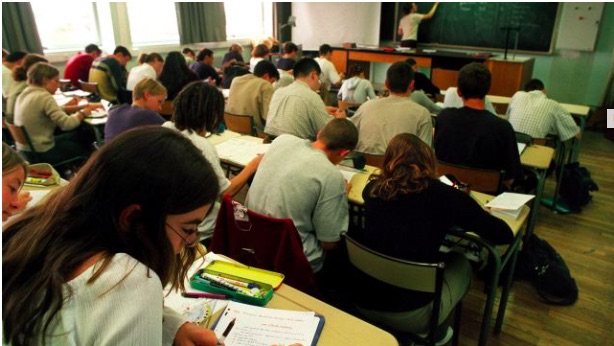
3) The largest number of events involve children, especially schoolchildren, in every part of the globe. A particularly moving example comes from Colombia where adults will soon vote in a referendum to ratify the peace accords. The rector of one of the schools sponsoring a mobilization of school children for Peace Day in Cartegana explained that ““Adults talk of ‘Yes or No’ because they are the ones who can vote in the plebiscite, but the children were not asked about this although it is they who will inherit a country at war or at peace.” She added that “what we say on this day is that children can also decide about peace.”

In the year 2000, 40% of the population of Colombia signed the Manifesto 2000, promising to promote a culture of peace in their daily lives. Now the people of Colombia are voting to ratify the peace accords and mobilizing their children to decide for peace. May they serve as our example in the gathering struggle to replace the culture of war by a culture of peace.


FREE FLOW OF INFORMATION

world map idp

Celebration of the International Day of Peace around the world

WOMEN’S EQUALITY


Africa: CEDEAO: Women are called on to establish a durable peace

DEMOCRATIC PARTICIPATION


Mexico: Mancera opens the International Forum of ‘Mayors for Peace’

HUMAN RIGHTS


The Elders welcome Myanmar peace conference

TOLERANCE AND SOLIDARITY


United Nations: Inauguration of the Parliamentary Multi Track Initiative Council for the SDG’s and the Culture of Peace

SUSTAINABLE DEVELOPMENT


USA: Standoff at Standing Rock: Even Attack Dogs Can’t Stop the Native American Resistance

DISARMAMENT AND SECURITY


600+ Campaign Nonviolence Events Across USA Next Week!

EDUCATION FOR PEACE


Snowden: Best Film of the Year

English bulletin September 1, 2016

. . . CITIES ONCE AGAIN . . .

Once again this month, we find cities in the lead for the various componens of a culture of peace, including sustainable development, tolerance and solidarity, democratic participation, peace activism and disarmament.

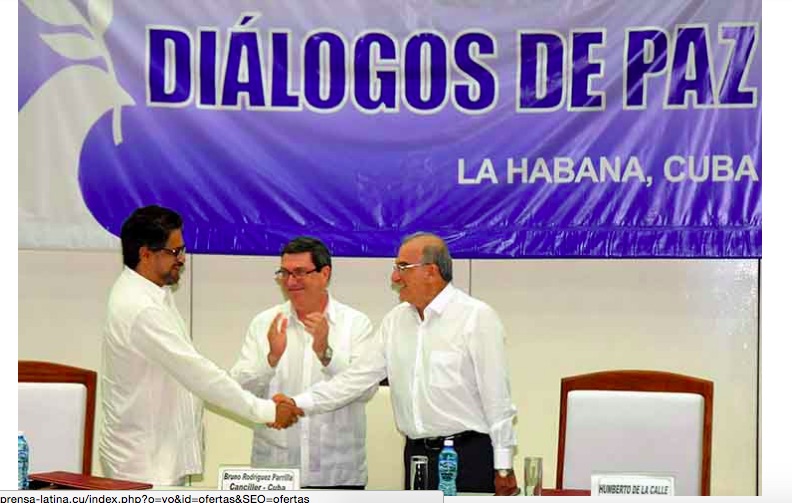
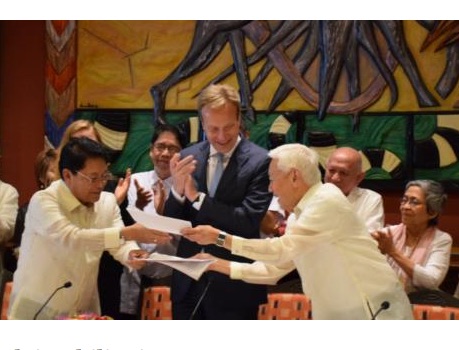
Before going into detail, we should celebrate the formal signing of the peace accord for Colombia, which has been under negotiation for several years and which has been followed, step-by-step, by CPNN, as well as the progress towards a peace accord to end 47 years of war between the government of the Philippines and the communist movement National Democratic Front.

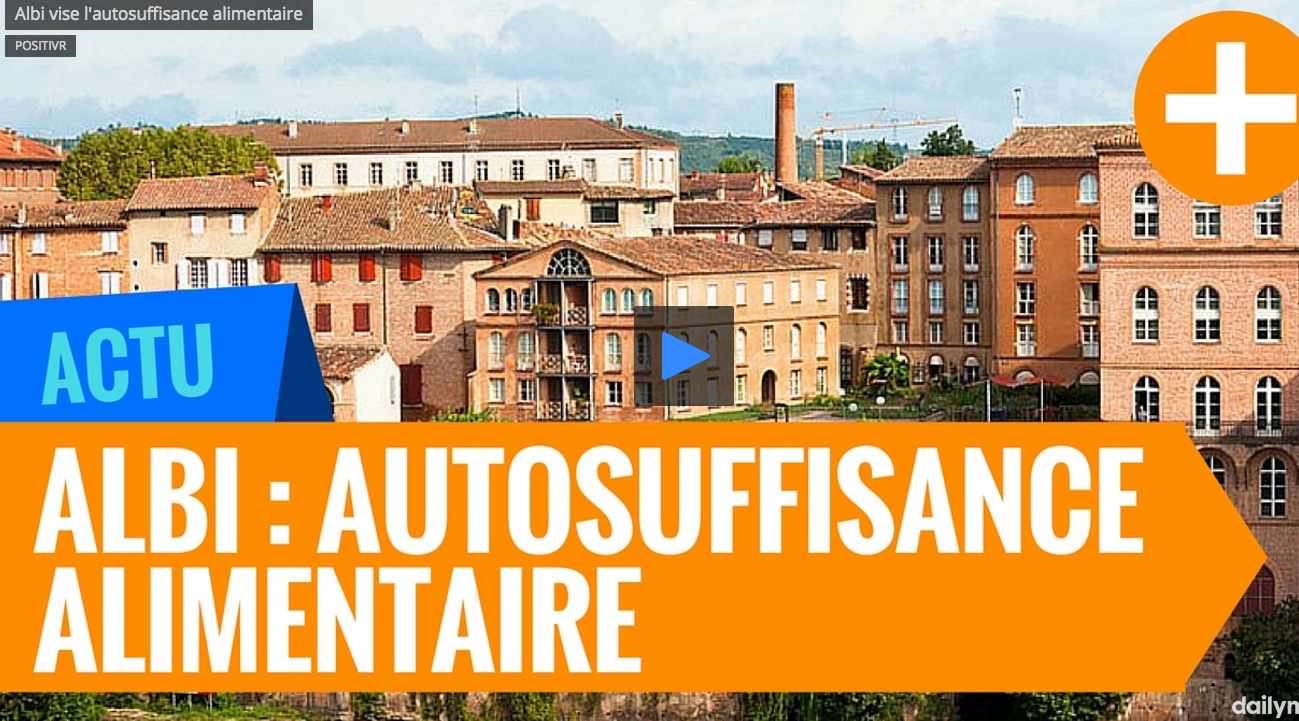
The city council of Rennes, France, has voted unanimously to endorse a project working towards food sovereignty. This is the second city of France to take such an approach, the first having been the city of Albi. The project involves a partnership with the NGO “Incredible Edibles.” In presenting the project, Councilman Theurier stated, “The approach of Incredible Edible can offer spaces to garden for residents, can strengthen social ties, and promote the greening of the city. It offers free food and promotes the development of urban agriculture and therefore food autonomy of cities. Above all, it can educate for the protection of the environment and recreate the link between people in city and those in food production areas. As the urban population continues to grow, issues related to agriculture – including the preservation of the land – are less tangibly perceived by many of our fellow citizens. Recreating this link is a necessity for the future.”

The Mayor of Madrid, Spain, argues that cities can overcome the formal frameworks that keep nation states from resolving key issues. Madrid, for example, has negotiated its own accord with the United Nations to welcome refugees. It has instituted participatory budgeting which can help to end democratic apathy. And as we have noted earlier, Madrid’s response to terrorism is to promote a pro-peace education. As the mayor says, “It starts at school. We want children to learn the value of dialogue and mediation, and for them to learn to solve their own problems among themselves.”

The Culture of Peace Commission of Ashland, Oregon (USA) continues to show the way for promoting peace at the level of the city. It has established a ” Community Peacebuilders Network” which lists “all of those local groups and individuals, from all sectors of our community, that have already decided to join us.” The Commision plans to hold periodic conferences “encouraging collaborative solutions as we work toward our goal of creating an interconnected web of peace, justice, sustainability and inclusion in our local area.”

The newest city peace commission is that of Santos, Brazil. The commission supports the Mayors for Peace Network, as well as activities of civil society, such as the “Paz na ponta do Giz” project of ABrasOFFA that promotes the concepts of peace within schools. A key role of the commission is to make the subject of PEACE a priority on the agendas of all leaders of the city (whether formal, such as the mayor and city representatives, or informal such as leaders that influence citizens’ decisions).

Finally, the UCLG (United Cities and Local Governments) have announced the five finalists for the City Peace Prize which will be awarded during their annual conference to be held in Bogota, Colombia in October. Appropriately (given the signing of the peace accords), two of the cities are in Colombia: Palmira and Cali. Palmira uses a music competition to promote peace, while Cali is training community peace workers. The other cities are Canoas, Brazil, which has established “peace territories,”, Shabunda, DRC Congo, which has created “Permanent Peace Committees”, and Kauwagan, Philippines, for their programme “From Arms to Farms” for the demobilization of former rebel soldiers.

      
DEMOCRATIC PARTICIPATION


Iranian Women Won More than a Medal at the Olympics

WOMEN’S EQUALITY


Peru: #NiUnaMenos: 50,000 protest violence against women in Lima

FREE FLOW OF INFORMATION


Historic Peace Accord for Colombia Is Signed in Havana

HUMAN RIGHTS


UN: National Human Rights Institutions will play a more strategic role in education

TOLERANCE AND SOLIDARITY


Global Youth Rising 2016 – Reflections

SUSTAINABLE DEVELOPMENT


Rennes, France: 210 000 inhabitants move towards food self-sufficiency!

DISARMAMENT AND SECURITY


Breakthrough in Philippine peace process

EDUCATION FOR PEACE


Three Decades of Peace Education in the Philippines

English bulletin August 1, 2016

PEACE EDUCATION AROUND THE WORLD .

History is not always reflected in the headlines of the mass media. Sometimes it is the “slow news” – events that are not considered newsworthy – that accumulate and change the course of history. A good example is slow but steady progress in peace education, which we salute in this month’s bulletin.

The website of the Global Campaign for Peace Education gives us a good overall view of the extent of peace education in the world today. One can begin simply with the list of their national and local endorsing organizations, who come from over 50 countries and all six continents.

This month we feature recent articles reprinted by the Global Campaign for Peace Education from around the world: from Myanmar, Bosnia, United Kingdom, Rwanda, Georgia, United States and the Seychelles.

In Myanmar, the Ministry of Education and UNESCO are jointly implementing the “Education for Peace and Development in Northern Rakhine State” project. Teachers, principals and education officers have been trained in life skills for peace and conflict transformation

In Bosnia, the United World Colleges of Mostar are celebrating their 10th anniversary. UWC Mostar was the first school having students from across the country being taught by the same teachers and in the same classroom, unlike the segregational educational system still prevailing in the rest of the country.

In the U.K., Quakers will host a ground-breaking national conference for teachers to learn how to equip pupils to handle conflict in a constructive way and to develop critical thinking skills. Educationalists from more than 80 schools across Britain will attend Learning Through Peace at Friends House in London.

The Rwanda Peace Education Program is coming to a close after three years of building sustainable peace in communities across the country. The conclusion will be marked by a Peace Week that includes various activities to share the success of the program and encourage all Rwandans to be champions of peace in their own villages and families.

In Georgia, The European Intercultural Forum has just finalised the narrative report of their 1st training course in the frame of the Training Programme “Education for Peace – Developing Competences for Peace Education in the Youth Field”. The project aims to strengthen the competences of youth workers and youth educators and empower young people to become pro-active agents of peaceful change via local community initiatives addressing societal conflicts.

In the U.S., the Ashland (Oregon) Peace Commission works with the city’s schools and their MindUp Curriculum which offers peace education tools that encourage listening and compassion and promote an environment of understanding, as well as with the Medford-based Resolve Center for Dispute Resolution and Restorative Justice.

The University of Seychelles has announced that it is planning to set up an international centre for peace studies and diplomacy with the expert guidance and experience of Seychelles’ founding President Sir James Mancham. The proposed professor of peace studies will provide both academic leadership and proven negotiating skills. The centre will be a hub of information and also a meeting place for practitioners and scholars alike. Conferences will be a feature of the centre’s activities. Under the auspices of the UniSey, it will offer a Master’s Degree in peace studies for local as well as international students, together with opportunities for doctoral and post-doctoral research.

Just to complete our tour of the world, we mention four other recent CPNN articles about progress in peace education in Colombia, Brazil, Japan and Ivory Coast.

The Colombia Minister of Education, Gina Parody, speaking at the meeting of secretaries of education from across the country, invited them to teach a new generation of peace, preparing children and young people to consolidate peace. Among her remarks was the following: “For the first time, the government has allocated a larger budget for education of our children and young people, that the budget for war. We are convinced that it is in the classrooms that the new generation will begin to rewrite the history of Colombia as a country in peace.”

In São Vicente, Brazil, a team of educators is carrying out a program of Training for Peace Education of 60 hours for professionals from all the public education units in partnership with the Secretary of Education.

In Hiroshima, the Mayors for Peace Network organizes in partnership with the Hiroshima Peace and Culture Foundation and the Hiroshima University, a summer program that provides students with a general understanding of the nature and attributes of war and peace by illuminating various aspects of wartime experiences, including the atomic bombing of Hiroshima, and, at the same time, by exploring contemporary issues related to world peace in the era of globalization

In Yamoussoukro, Ivory Coast, the Deputy Director for Africa of UNESCO, Edouard Firmin Matoko announced the creation of a school for the Culture of Peace. Called the “Pan-African center for research and advanced training in the culture of peace”, its objective will be ” capacity building of decision-makers in the values ​​of peace and citizenship”.

Finally, there are two major events coming up where peace educators and others interested in peace are invited to come and advance their international links. The Congress of the International Peace Bureau, the oldest global peace network, founded in 1891/92, will take place at the end of September this year in Berlin, while the 9th international conference of the International Network of Museums for Peace will be held in Belfast in April 2017.

      
EDUCATION FOR PEACE

gcpe
The Global Campaign for Peace Education

WOMEN’S EQUALITY


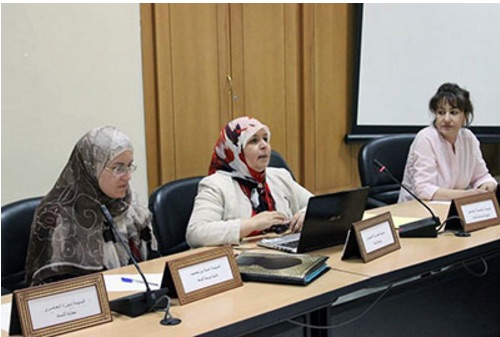
Tunisia moves closer to achieving gender equality in politics

FREE FLOW OF INFORMATION


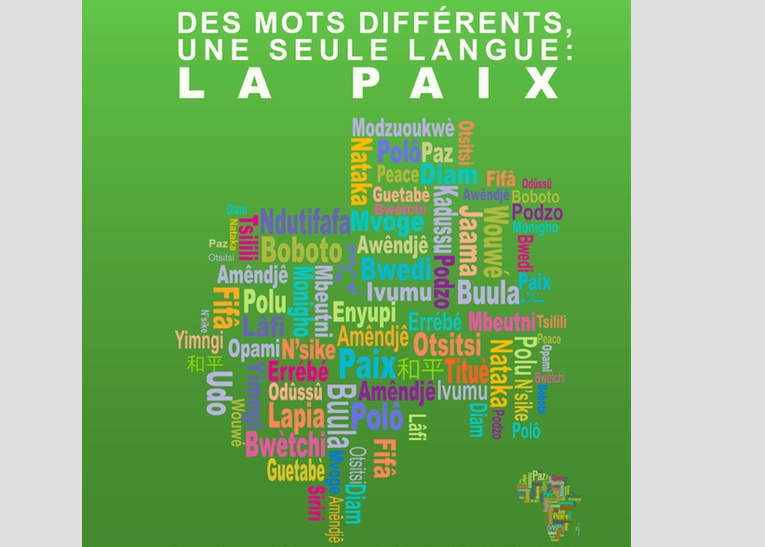
Culture of Peace: Artistic Creations by African Youth

HUMAN RIGHTS


Malaysia: Tenaganita Still Fighting for Women Workers’ Rights, 25 Years On

TOLERANCE AND SOLIDARITY


Petition: Another Route to Peace

SUSTAINABLE DEVELOPMENT


Africa: Sustainable development: The future of the land is in green energy

DISARMAMENT AND SECURITY


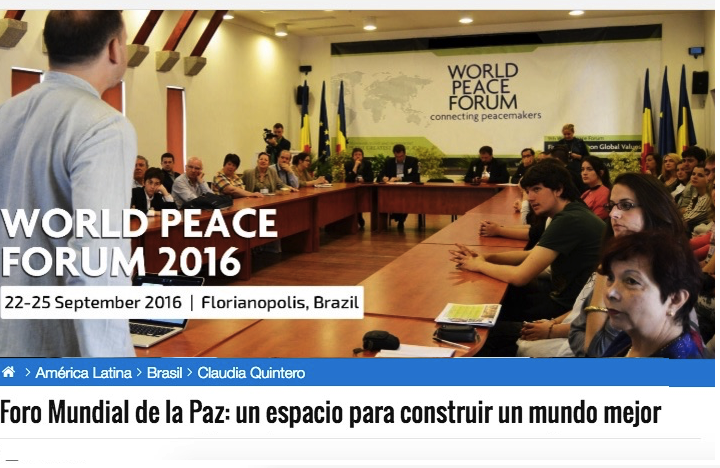
Florianópolis, Brazil: World Peace Forum: a space to build a better world

DEMOCRATIC PARTICIPATION


Londrina, Brazil: Fifth Municipal Conference on Culture of Peace

English bulletin July 1, 2016

. . . PEACE IN COLOMBIA . . .

The government of Colombia and the FARC guerilla movement have agreed on a ceasefire and plan for demobilization. The bilateral ceasefire and surrender of the weapons will begin with the signing of the final peace agreement (expected in July) and this last point will have a term development of 180 days. A monitoring group composed of delegates from the UN will be created by the FARC and the Colombian government to verify the delivery of the guns. Also announced was the creation of areas and camps for demobilized guerrillas and commitment by the authorities to combat paramilitary groups, by means of a special unit of the Colombian police.

As stated by the UN Secretary-General Ban Ki-Moon, “Today the Colombian peace process validates the perseverance of all those around the world who work to end violent conflict not through the destruction of the adversary, but through the patient search for compromise.”

According to analysts, “What remains between now and a final, conflict-ending peace accord are details. Some of these will be thorny, and may require weeks or even a few months to unravel. But the hardest parts of the FARC peace process are now in the past.”

Already, the first United Nations observers have arrived to help with the demobilization process.

The Colombia people are celebrating but still fearful, as described by Amada Benavides, Fundación Escuelas de Paz: “Today at 12:39 when President Santos and the FARC leader signed the agreement, all of us, our partners and myself, only can to cry. After 60 years of war, we not really believe what it happened in that moment. Many of us never think in could seeing this moment.  At night, we had a workshop about Women, Diversity and Peace, and the feeling turned between hope, fear and anxiety. Hope for the possibilities the agreement has. Fear for many populations is not yet convinced in the benefits of peace; and anxiety for all the work we have in this moment. Peacebuilding moment starts just now. Today we need more support than ever.”

Last month the government and FARC signed an agreement to ensure that their peace accords will be binding on future governments of Colombia. This is important because there is already an opposition movement in Colombia headed by an ex-president who say they will try to overturn the accords.

As we have often said, peace is too important to be left alone in the hands of the national government. What is important is that it is being taken up by people at all levels in Colombia.

A key role is played by teachers and the movement for peace education, as in a recent meeting in Bogota: “Participants . . . included teachers, academics and trainers who shared their experiences and daily reflections. Together, they reaffirmed that there will be no peace unless there is peace education to transform the culture, and this requires a renewal of pedagogy.”

Artists and cultural actors have an important role to play, as described by the Director of a theatre in Medellin: “We have to to disarm our words because they are still loaded with violence. That will take a lot of pedagogy and here culture can help a lot. We need to heal, to seek the truth, to have some kind of repair,”

Colombian women, under the banner of “One Million Women for Peace,” are demanding a greater role in the peace process, saying that “Peace in Colombia Is Impossible Without Us”. The newly-formed bloc aims to create a community movement to provide popular backing for the peace process. The movement brings together farmers, artists, journalists, youth and political representatives of indigenous and Afro-Colombian communities.

It is especially important to establish peace at the level of local government. For example, the city of Cali, Colombia, has established a “Plan for Peace and Peaceful Coexistence”. It is a guide prepared by the Peace Advisory Council, in consultation with different social actors such as the High Council for Peace and Human Rights of the Government of Valle, the Archdiocese, universities along with staff of the mayor’s office in Cali and agencies such as the Post-Conflict Advisory Council.

As stated by Raul Castro, who mediated the accords, “The achievement of peace in Colombia represents a hope for millions of people on the planet, whose main concern continues to be human survival in a world shaken by violence and wars. Peace is not a utopia; it is a legitimate right of every human being and of all peoples. It is a fundamental condition for the enjoyment of all human rights, particularly the supreme right to life.”


FREE FLOW OF INFORMATION

acuerdo

Ceasefire between FARC and the government of Colombia is sealed in Cuba

WOMEN’S EQUALITY


Guatemalan Women Healing Toward Justice: Speaking tour

EDUCATION FOR PEACE


Ivory Coast: UNESCO announces the creation of a school for the Culture of Peace in Yamoussoukro

HUMAN RIGHTS


‘March of Silence’ in Uruguay sends message of remembrance to South America

TOLERANCE AND SOLIDARITY


Togo in the struggle against terrorism: The “Pacific Magazine” plays its part

SUSTAINABLE DEVELOPMENT


The film “Demain”, a manifesto?

DISARMAMENT AND SECURITY

UNSC

The Elders welcome Paris conference as step towards two-state solution for Israel-Palestine

DEMOCRATIC PARTICIPATION


The Peace Prize for city initiatives in conflict prevention, resolution or peace building

English bulletin June 1, 2016

. REFORMING THE UNITED NATIONS .

Since its creation over 70 years ago, the United Nations has been the hope of mankind “to save succeeding generations from the scourge of war.” But more and more, we are losing hope that in its present form it can succeed. This was especially evident in recent weeks when the great powers did not bother to send high-level delegations to the UN’s Humanitarian Summit despite the fact that 60 other countries sent their heads of state. While Germany was represented by its Chancellor Angela Merkel, the other great powers were essentially absent: Canada, France, Italy, Japan, the United Kingdom, the United States, Russia and China.

Therefore, it is not surprising that there is a rising chorus of demands for reform of the United Nations.

The most dramatic and far-reaching demand comes from Africa. This month the Pan-African Parliament, with representives from the 54 countries of Africa, has called upon the African Union to support its demand for a new UN body, a United Nations Parliamentary Assembly. The Parliament’s President explained that “It is long overdue that ‘We, the Peoples,’ as the UN Charter begins, have more say in global affairs. For this purpose, a UNPA needs to be established.” This could become a powerful voice for peace. Instead of reflecting the policies of Member States with their military budgets and military policies, the proposed Assembly would be composed of representatives of bodies directly elected by the people and without direct responsibility for military institutions.

Another call for extensive reform comes from a group including former UNESCO Director-general Federico Mayor. Their joint declaration calls for a “new UN System” with a General Assembly of 50% of States representatives and 50% of representatives of civil society, and adding to the present Security Council and Environmental Council and a Socio-Economic Council. In all cases, no veto but weighted vote.

Many calls for reform consider that the present Security Council, with veto powers by the five Permanent members, the victors of World War II, is outmoded and ineffective in dealing with today’s global problems.

There are ongoing meetings of the Intergovernmental Negotiations on Security Council Reform, but they are complicated by rivalries among the Member States. At the most recent meeting at the beginning of May, India called for additional Permament members, including themselves, Brazil, Japan and Germany, thus including the losers as well as the winners of World War II. But immediately there were objections from India’s rival Pakistan and from Japan’s rival North Korea, as well as from another group of 13 countries led by Italy. Another proposal was put forward by Ireland for a new category of Security Council members with an 8 year term. They proposed 6 seats in this category, with 2 each from the African and Asia-Pacific group, and 1 each from WEOG (Western Europe and Others Group) and GRULAC (Group of Latin American and Caribbean Countries).

At the recent Humanitarian Summit, the Arab League, which consists of 22 member states, including Algeria, Egypt, Iraq, Jordan, Qatar and Saudi Arabia, called for limitation on the veto power of the Permanent Security Council Members, echoing a similar demand by Turkish President Erdogan. This, too, was complicated by inter-state rivalries as their remarks were directed only against the use of the veto by Russia with regard to the war in Syria.

The Elders, the group of former heads of state and international agencies that was formed several years ago around Nelson Mandela, has made a series of recommendations regarding reform of the Security Council. They call for a new category of Council members with longer terms to counter-balance the five Permanent members, a pledge to restrict the use of their veto and more involvement of the civil society,

Another proposal of the Elders is for a more independent UN Secretary-General. This proposal is echoed in conclusions of the recent United Nations High Level Thematic Debate on Peace and Security, and it is already being implemented to some extent in new procedures to choose the next Secretary-General.

But the question remains: are these proposals radical enough to enable the UN “to save succeeding generations from the scourge of war?” In the view of the CPNN coordinator, we need a more radical approach; see his blog.


DISARMAMENT AND SECURITY

unsc

Intergovernmental Negotiations on Security Council Reform

WOMEN’S EQUALITY


Peace in Colombia Is Impossible Without Us, Women Declare

EDUCATION FOR PEACE


Paris: A standing orchestra !!!

HUMAN RIGHTS


Red carpet film festival asserts Gaza’s pride and talent

TOLERANCE AND SOLIDARITY


Mali: The struggle against terrorism: Towards the creation of a global network of Ulemas

SUSTAINABLE DEVELOPMENT


Tens of Thousands Take Part in Global Actions Targeting World’s Most Dangerous Fossil Fuel Projects

FREE FLOW OF INFORMATION


Colombia celebrates agreement to legally bind the peace accord

DEMOCRATIC PARTICIPATION


For the first time, a Peace Plan for Cali, Colombia

English bulletin May 1, 2016

. NONVIOLENCE IS MAKING HISTORY .

Nonviolence is in our news these days. Let us begin by recalling the words of the great tactician of nonviolence, Martin Luther King, speaking of Mahatma Gandhi: “nonviolent resistance is not a method for cowards; it does resist. If one uses this method because he is afraid or merely because he lacks the instruments of violence, he is not truly nonviolent. This is why Gandhi often said that if cowardice is the only alternative to violence, it is better to fight… nonviolent resistance … is not a method of stagnant passivity… For while the nonviolent resister is passive in the sense that he is not physically aggressive toward his opponent, his mind and his emotions are always active, constantly seeking to persuade his opponent that he is wrong. The method is passive physically but strongly active spiritually. It is not passive non-resistance to evil, it is active nonviolent resistance to evil.”

Perhaps the most active practitioner of this approach today is the Nonviolent Peaceforce. They have recently been nominated for the Nobel Peace Prize in recognition of their teams “on the ground” in the various “hotspots” around the globe. In addition, they are actively trying to convince the United Nations and various governments to adopt nonviolence as a paradigm shift: “One of the most dramatic shifts will have taken place when everyone realizes that, the assumption that an armed actor will not yield to anything except a weapon has been proven to be untrue.”

All of this is part of the long-term strategy announced recently by Nonviolent Peaceforce: “We protect civilians in violent conflicts through unarmed strategies. We build peace side by side with local communities. We advocate for the wider adoption of these approaches to safeguard human lives and dignity.”

Another major practitioner of nonviolence is the Mennonite Central Committee, which recently publicized initiatives in seven countries on four continents.

Meanwhile, Pax Christi and other activists recently convened a meeting at the Vatican to enlist the Catholic Church in the approach of nonviolence, requesting that the church reverse its support for “just wars.”

We should also mention the Nonviolence Charter which has now been signed by 104 organisations from 33 countries, as well as the new initiative that we mentioned last month for nonviolent cities.

In celebrating Earth Day this month, the Campaign Nonviolence reminds us that to protect our planet we need to live “nonviolently” with such practices as sustainability, renewable energy, lowering meat consumption, and supporting local food.

One of the major tactics of nonviolence is mediation. Recently, we have featured articles on the training of police for mediation, as well as specific initiatives in Mexico and Bolivia.

These initiatives may not be featured in the headlines of the commercial media, where violence is considered more newsworthy, but in the long run the initiatives for nonviolence are making history, while violence is only impeding it.


EDUCATION FOR PEACE

paradigm

Nonviolent Peaceforce: A paradigm shift?

WOMEN’S EQUALITY


Bahrain Women Association conducted a workshop on peace

DISARMAMENT AND SECURITY

trident

Disarm! World Congress 2016 of International Peace Bureau

HUMAN RIGHTS


USA: Prisoners in Multiple States Call for Strikes to Protest Forced Labor

TOLERANCE AND SOLIDARITY


Landmark Vatican conference rejects just war theory, asks for encyclical on nonviolence

SUSTAINABLE DEVELOPMENT


On Earth Day, Commit To The Great Turning

FREE FLOW OF INFORMATION


2016 World Press Freedom Index ­– leaders paranoid about journalists

DEMOCRATIC PARTICIPATION


Democracy Spring: Thousands Descend on US Capitol, Over 400 Arrested

English bulletin April 1, 2016

. . CULTURE OF PEACE CITIES . .

The culture of peace is increasingly promoted at the level of the city according to the articles we have been publishing so far this year in CPNN.

At the highest level, the mayor of Madrid, Manuela Carmena, and the mayor of Paris, Anne Hidalgo, are planning to hold an international forum against violence and for peace education. Along with Brussels, their cities have suffered the most from terrorist attacks in Europe. While nation states promote military responses, they propose education for non-violence.

While nation states continue to make nuclear weapons, the network of Mayors for Peace, with over 6,900 cities in 161 countries, continues to prioritize the struggle for nuclear disarmament. We recently published an article from one of their member cities, Wellington, New Zealand.

The network of International Cities of Peace, with 130 member cities in 40 countries, has recently announced an alliance with the newly formed network of Compassionate Cities that includes 70 cities in almost 50 countries that have affirmed the Charter for Compassion, which promotes a culture of peace at the local level.

In the United States there is a growing movement of cities that undertake the transformation to a culture of peace.

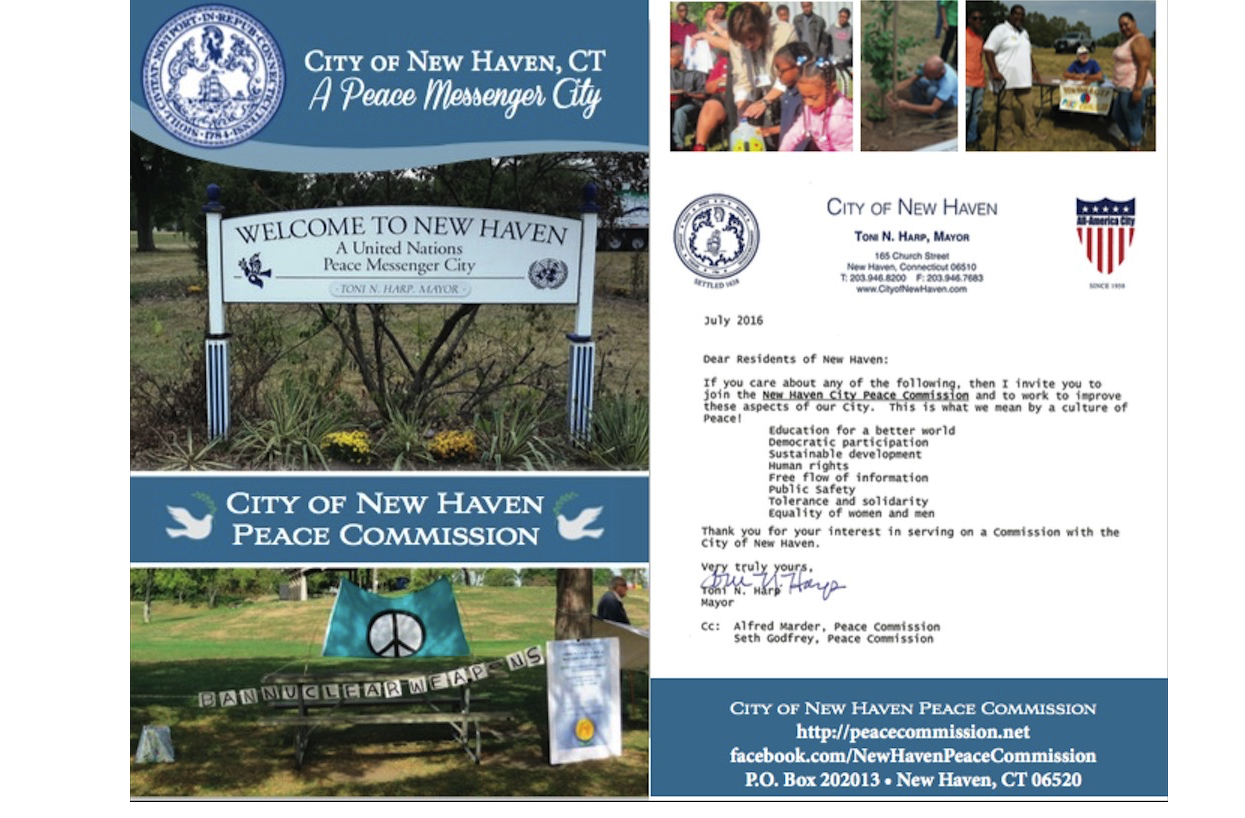
In New Haven, Connecticut, this is the fourth year that the City Peace Commission, an organ of city government, has published a report on The State of the Culture of Peace in New Haven. The report identifies priorities for action by the city. Two of their priorities have been featured in recent CPNN articles: restorative justice in the schools, and welcoming refugees.

The city of Ashland, Oregon, has recently established an official City Culture of Peace Commission, and among its tasks is a similar annual report on the state of the culture of peace in their city. Other tasks include the training of peace ambassadors, peace education in schools, a directory of community resources that promote a culture of peace, and a monument containing the World Peace Flame.

Civil society organizations in Wilmington, Delaware, are developing a “strategic vision, plan and resource document that will bring peace to Wilmington. The plan will deal with the actions needed to transform a culture of violence to a culture of peace. The plan would include input from civic groups, city and state governments and agencies, churches, students, the elderly, and general public.”

A new initiative aims to create a network of Nonviolent Cities, modeled after an initiative in Carbondale, Illinois. Its goals are similar to those of New Haven, Ashland and Wilmington: “Nonviolent cities would work to end racism, poverty, homelessness, and violence at every level and in every form; dismantle housing segregation and pursue racial, social and economic integration; end police violence and institutionalize police nonviolence; organize to end domestic violence and teach nonviolence between spouses, and nonviolence toward all children; work to end gang violence and teach nonviolence to gang members; teach nonviolence in every school; pursue more nonviolent immigration programs and policies; get religious leaders and communities to promote nonviolence and the vision of a new nonviolent city; reform local jails and prisons so they are more nonviolent and educate guards and prisoners in nonviolence; move from retributive to restorative justice in the entire criminal justice system; address local environmental destruction, climate change, and environmental racism, pursue clean water, solar and wind power, and a 100 percent green community; and in general, do everything possible to help their local community become more disarmed, more reconciled, more just, more welcoming, more inclusive, and more nonviolent.”

The practices promoted by culture of peace cities include mediation, restorative justice and participative budgeting, as described in previous CPNN articles.


DEMOCRATIC PARTICIPATION

Ashland

USA: Working on creating a culture of peace in Ashland

WOMEN’S EQUALITY

csw unionists

Education International and other Global Union Federation delegations begin their work at the 60th Session of the UN Commission on the Status of Women

DISARMAMENT AND SECURITY

trident

United Kingdom: Thousands call for Britain’s nuclear deterrent Trident to be scrapped

HUMAN RIGHTS

amnesty

2015: When Global Governments Trampled Human Rights in Name of National Security

TOLERANCE AND SOLIDARITY

rising

GLOBAL YOUTH RISING: Empowering passionate activists and peace workers from around the world– JULY 2016

SUSTAINABLE DEVELOPMENT

Fishing

Fishing ban in remote Pacific waters is working, report finds

FREE FLOW OF INFORMATION

guantanomo

Guantanamo could be turned from a war facility to a peace park

EDUCATION FOR PEACE

patrir
Romania: Systemic Peacebuilding, Conflict Transformation & Post-War Recovery and Reconciliation