. . WOMEN’S EQUALITY . .
An article from Prensario (translated by CPNN)
The production, which consists of four episodes filmed in Chile, Colombia, Guatemala, and Mexico with Daniela Vega, Yalitza Aparicio, Shirley Manson, and Ester Expósito. The premiere is scheduled for Sunday, March 8, coinciding with International Women’s Day.
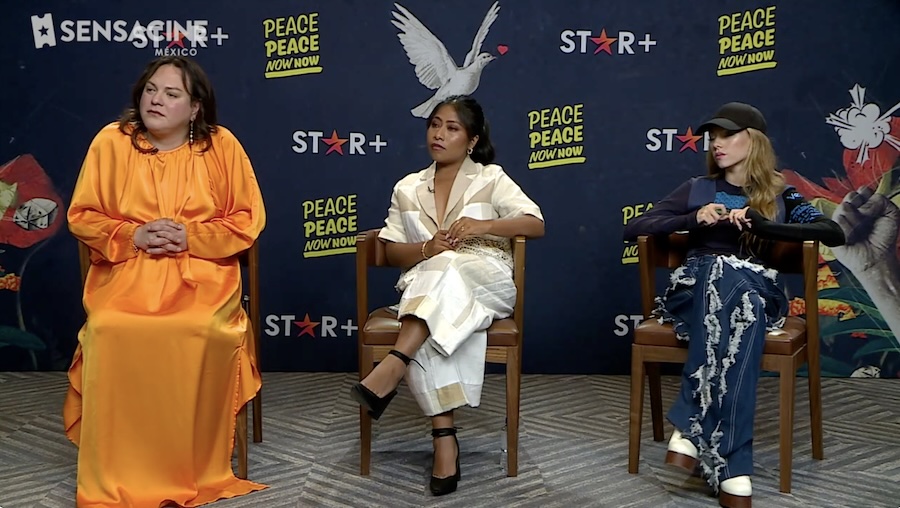
Interview with protagonists of Peace Peace Now Now
The pay television channel Lifetime presented the documentary miniseries Peace Peace Now Now, a work that compiles testimonies from women who survived armed conflicts and situations of structural violence in Latin America. The production uses a narrative format where figures from film and music introduce stories of resistance and processes of seeking justice in the region.
The series is divided into four episodes, each focused on a country and a specific social issue:
Chile: Hosted by singer Shirley Manson, the episode addresses the story of La Cueca Sola. The story describes the organization of women who, after the disappearance of their relatives during the military dictatorship, transformed the national dance into a tool for public denunciation and remembrance.
Do women have a special role to play in the peace movement?
(article continued from left column)
Colombia: Actress Daniela Vega, who also serves as executive producer, presents the story of La Ciudad de las Mujeres (The City of Women) in Turbaco. This segment details the founding of a community built by women displaced by the conflict between guerrillas and paramilitary groups.
Guatemala: Guided by Yalitza Aparicio, the episode focuses on the Grandmothers of Sepur Zarco. The content documents the journey of Indigenous women survivors of slavery and sexual violence during the civil war, who initiated legal processes to obtain historical reparations.
Mexico: Actress Ester Expósito accompanies journalist Lydia Cacho. The episode explores the consequences of her investigations into child trafficking networks and the persecution that led to her exile.
The episodes were directed by an all-female team comprised of Javiera García Huidobro (Chile), Ignacia Matus (Colombia), Pepa San Martín (Guatemala), and Isabel Coixet (Mexico). The production was a global success, handled by BlackStar and Alto Andes Films. Regarding distribution on content platforms, the network confirmed the following schedule:
Episodes 1 and 2 are available on VOD systems starting March 1.
Episodes 3 and 4 will be available on the same platform starting March 8.
The series will remain in On Demand catalogs until April 30.
Following its linear broadcast, the production will be added to History’s official YouTube channel.
This technical and editorial initiative by Lifetime seeks to document collective responses to contexts of oppression and inequality, using television as a record of human rights in the Americas.
– – – – – –
If you wish to make a comment on this article, you may write to coordinator@cpnn-world.org with the title “Comment on (name of article)” and we will put your comment on line. Because of the flood of spam, we have discontinued the direct application of comments.