Category Archives: d-education

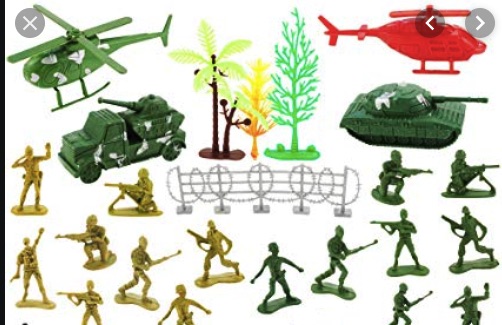
Do war toys promote the culture of war?

While it’s not clear that war toys promote a culture of war, it is clear that the reverse is true, i.e. the culture of war promotes war toys.

Here is a good discussion of this.

Critics of war play frequently treat play as if it occurs in such a social vacuum, with little consideration of the broader societal context in which play happens. Social and cultural values shift with time and it is foolhardy to think that toys and play will not follow these trends. Increasing levels of aggression within toys have to be seen as part of a wider trend within society towards desensitisation of violence. Today, violence is brought ever closer to home through the intensity of round-the-clock news footage of armed conflict and incidents of terrorism, and the use of cultures of fear by world leaders to sustain particular (geo)political ideologies.

When reflecting upon the trend reported in the study, economic factors also have to be taken into consideration. Toy companies have to produce a saleable product – and this tends to be a product reflective of wider societal trends. With the drive towards franchising and diversification of target audiences as marketing strategies (as seen with the Lego brand, prompting the likes of Star Wars, Lord of the Rings and Harry Potter themed play sets, and the targeting of adult consumers) digital media is leading developments in non-digital media. Here we are seeing trends towards fantasy scenarios centred on overcoming imaginary evils.

Scholars have shown this is part of wider cultures of fear within the post 9/11 era. Toys and digital media are, therefore, reflecting the social and political life of their time and contributing to the prevailing geopolitical climate. Childhood is not a sphere of innocence magically shielded from the wider world; it plays an active part in shaping it.

Here are the CPNN articles on this subject:

Parents should buy peace toys for their children

Mexico: Inauguration of the campaign “Game as an Instrument for the Culture of Peace”

Londrina, Brazil: 9th edition of “A Weapon is not a Toy”

– – – – The Link for the following article does not work because it was made by a version of PERL programming that is no longer supported. With three easy steps, you can find the article by its number. First, click on it before returning to this page. Your browser will say that the article is not available but in the address listed you can see that it was located at ViewArticle=xxxx where xxxx is the number of the article. Returning to this page, then click here for the listing of all years. Then click on the year that contains the number for the article you seek. It will send you to the page where you can easily search for the article by its title. – – – –
Londrina encourages its merchants not to sell toy weapons.

Gender equality in education, Is it advancing?

Here are the CPNN articles on this subject:

Mexico: Curricular Strategy on Gender Equality to be implemented in public schools

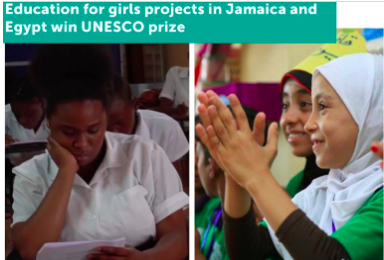
Education for girls projects in Jamaica and Egypt win UNESCO prize

Canada and partners announce historic investment in education for women and girls in crisis and conflict situations

– – – – Links for the following articles do not work because they were made by a version of PERL programming that is no longer supported. To find the article, click on it before returning to this page. Your browser will say that the article is not available but in the address listed you can see that it was located at ViewArticle=xxxx where xxxx is the number of the article. Return to this page and click here for the listing of all years. Then click on the year that contains the number for the article you seek. It will send you to the page where you can easily search for the article by its title. – – – –-

Day of the Girl Child — Writings by Afghan women

In education, girls deserve what works

Launch of World Atlas of Gender Equality in Education

Understanding the culture of peace, What are the key videos?

To begin this discussion, see the videos from three people who first developed the culture of peace concept at UNESCO and the United Nations, Federico Mayor Zaragoza, Anwarul Chowdhury and David Adams:

This discussion question applies to the following articles:

Johan Galtung: The Fall of the US Empire

– – – – Links for the following articles do not work because they were made by a version of PERL programming that is no longer supported. With three easy steps, you can find the article by its number. First, click on it before returning to this page. Your browser will say that the article is not available but in the address listed you can see that it was located at ViewArticle=xxxx where xxxx is the number of the article. Returning to this page, then click here for the listing of all years. Then click on the year that contains the number for the article you seek. It will send you to the page where you can easily search for the article by its title. – – – –
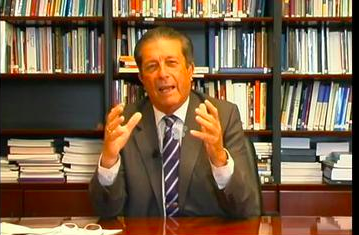
Culture of Peace: Interview with Mr. Federico Mayor Zaragoza, ex-Director-General of UNESCO

The Secret of the 5 Powers – A documentary about nonviolent heroes

Federico Mayor: Culture of Peace

Federico Mayor: Cultura de Paz

David Adams: Culture of Peace

Anwarul Chowdhury: Building a Culture of Peace Lecture

How can poetry promote a culture of peace?

Dr. Ada Aharoni, the founder of IFLAC considers that through poetry, people from both sides of conflicts, might come to understand each other better, and that this understanding can lead to the promotion of peace, as she explains below:

THE POWER OF THE POEM AND PEACE THROUGH POETRY

“The real profound difference between human beings is their Culture: mainly, their Cultural Heritage, Literature, Poetry, Language, Values, Norms, Traditions and their History. In the case of people in long conflicts – like the Israelis and Palestinians – feelings of fear, mistrust and lack of understanding have been piling up in their hearts and minds over the years, on both sides.

Only a suitable vehicle that can reach and profoundly penetrate through those layers of mistrust, suspicion and fear, can overcome those separating boundaries and build bridges of trust and respect for each other’s humanity. The best vehicle for this delicate operation is the magic and healing of the Poem, with its words of comprehension, feelings, care and tenderness. The poem has the marvellous ability to create bridges of trust and love.

Peace Poetry can also impart the important and crucial message that we all belong to one family, the family of humanity, and that violence and terror only lead to chaos, destruction, sorrow and deep pain and misery on all sides.

In every conflict there are two stories. The Poem of Peace, because of its wonderful ability to present both sides in all its reality, pain, hope and yearning for peace – can lead to mutual recognition and reconciliation, and to the building of confidence, trust, respect and love.”

Here are the CPNN articles on this subject:

World Movement of Poetry: for the Culture of Peace

From Madagascar: Identity specificity and civilization of the universal

IFLAC World Peace Festival : First edition in Argentina

Hall’s poetry about more than ‘black history

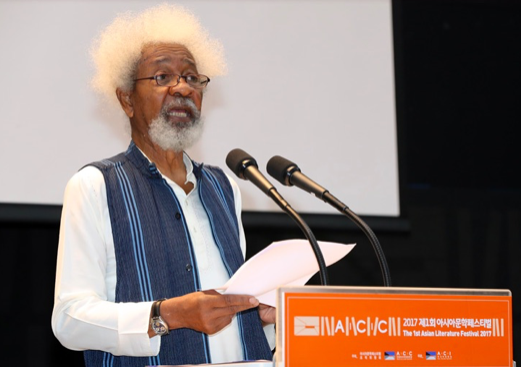
Gwangju, Korea: The 1st Asian Literature Festival

– – – – Links for the following articles do not work because they were made by a version of PERL programming that is no longer supported. With three easy steps, you can find the article by its number. First, click on it before returning to this page. Your browser will say that the article is not available but in the address listed you can see that it was located at ViewArticle=xxxx where xxxx is the number of the article. Returning to this page, then click here for the listing of all years. Then click on the year that contains the number for the article you seek. It will send you to the page where you can easily search for the article by its title. – – – – –

Une jeune malienne de 15 ans gagne le concours des « Chemins de la culture de la paix »

Young Malian aged 15 wins “Pathways to a Culture of Peace”> contest

Poets for Peace

What are some good films and videos that promote a culture of peace?

Here are some films and videos recommended by our readers.

Abu Sayyaf Threat And The Culture Of Peace In Basilan, Philippines: The Legacy Of Life And Martyrdom Fr. Rhoel Gallardo – OpEd

OCDS Video about Culture of Peace

Film review: Oliver Stone’s new JFK documentary

Film from South Africa: Everything Must Fall

Pre-screening of the film “The Forgiven” starring Forest Whitaker at UNESCO

Film: Truth, Deception and the Spirit of I.F. Stone

Film review: Disturbing the Peace

Snowden: Best Film of the Year

Documentary Review: “Where to Invade Next” by Michael Moore

Edward Snowden Congratulates Laura Poitras for Winning Best Documentary Oscar for Citizenfour

– – – – Links for the following articles do not work because they were made by a version of PERL programming that is no longer supported. With three easy steps, you can find the article by its number. First, click on it before returning to this page. Your browser will say that the article is not available but in the address listed you can see that it was located at ViewArticle=xxxx where xxxx is the number of the article. Returning to this page, then click here for the listing of all years. Then click on the year that contains the number for the article you seek. It will send you to the page where you can easily search for the article by its title. – – – –
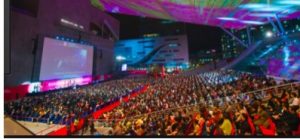
WACC-SIGNIS Human Rights Award 2013 Goes to “Caminhos da paz”

Giving rice for free!

PLURAL+ 2012 Youth Video Festival on Migration and Social Inclusion

Projet de festival international de marionnettes

Interfaith Jury Awards ‘The Orange Suit’ in Fajr International Film Festival

Black International Cinema Berlin: May 2-6, 2012

Rio+20 Global Youth Music Contes

Fourth Contest of Animations for Peace

Photo Contest: Peace in Young People’s Eyes

Gaming for Peace and Justice

Film festivals that promote a culture of peace, Do you know of others?

The following comes from the website of Signis, World Catholic Organization for Communication – Media for a Culture of Peace. They sponsor a number of film festivals around the world which emphasize the culture of peace.

Every day the media bring us more news of conflict, acts of terrorism, massacres, racism or xenophobia. It seems that we are drowning in a culture of hatred and war.

Let’s imagine instead for a moment that the world’s radio and TV stations were reporting on, and devoting a significant part of their programmes and broadcasts to gestures of reconciliation and acts of peacemaking. So alongside the culture of violence and war, which, of course, we cannot ignore, because it is part of what makes us human, they would develop in the media a Culture of Peace.

This does not have to remain only a dream. If every member of SIGNIS, radio, video and television producer, webmaster, educator, researcher and trainer, got involved in making programmes on those acts which are contributing to peace and in promoting gestures of reconciliation… all of us would have helped to increase the possibilities of helping to make the world a more peaceful place.

That is why the SIGNIS delegates, during their meeting in Cape Town in 2003, choose as the main objective for SIGNIS to work to promote a Culture of Peace through the media.

Here are CPNN articles on this topic:

Colombia: Cinema, historical memory and culture of peace

28TH FESPACO: Gold for Tunisia and silver for Burkina

Fifteen films bid for top prize in Africa’s premiere film fest

Burkina Faso: FESPACO will take place in February with the theme “African Cinemas and Culture of Peace”

Spain : Films for peace – ten years of MUSOC

The Páramo de Sumapaz, will be the scene of Colombian cinema festival

Brazil: Ecocine International Film Festival of Environmental and Human Rights

Mexico: Second Edition of the International Festival of Cinema for the Culture of Peace

MADRID: Fifth edition of the Film and Human Rights Festival

Burkina Faso: Blanche Bana wins the Sotigui Awards 2020

Iranian film “Castle of Dreams” wins at Religion Today filmfest in Italy

Burkina Faso : The 5th edition of Sotigui Awards looks at the contribution of women filmmakers to the culture of peace

Xalapa, Mexico: International Film Festival for a Culture of Peace

Korea: Busan Film Festival and creation of world culture

Challenge in Colombia: Peace displacing violence as inspiration for the arts

– – – – Links for the following articles do not work because they were made by a version of PERL programming that is no longer supported. With three easy steps, you can find the article by its number. First, click on it before returning to this page. Your browser will say that the article is not available but in the address listed you can see that it was located at ViewArticle=xxxx where xxxx is the number of the article. Returning to this page, then click here for the listing of all years. Then click on the year that contains the number for the article you seek. It will send you to the page where you can easily search for the article by its title. – – – –
Bridging the gap- -International documentary film festival

Taguatinga Film Festival accepting registration until the 30th ( Brazil )

Festival Taguatinga de Cinema tem inscrições abertas até o dia 30 (Brasil)

Human Rights Watch film festivals: Toronto and London

FESPACO 2013 : Preparations for an Excellent Festival of African Cinema

FESPACO 2013 : Des dispositions pour une belle fête du cinéma africain

International Festival of Nyamina, Mali: Cinema and Peace

Festival international de Nyamina, Mali : Cinéma et paix

If Only Everyone Wins Ecumenical Film Prize in Yerevan 2012

Black International Cinema Berlin: May 2-6, 2012

What are the most important books about the culture of peace?

As described in the book by Dietrich Fischer listed in the right column, Johan Galtung is indeed the most perceptive peace researcher of our time.

Not only did he predict the fall of the Soviet Union quite precisely, but he has also predicted the fall of the American empire.  Here are excerpts from his 2004 article, On the Coming Decline and Fall of the US Empire.

The prediction of the decline and fall of the US Empire is based on the synergy of 14 contradictions, and the time span for the contradictions to work their way through decline to fall was estimated at 25 years in the year 2000. There are more contradictions because the US Empire is more complex, and the time span is longer also because it is more sophisticated. After the first months of President George W. Bush (selected) the time span was reduced to 20 years because of the way in which he sharpened so many of the contradictions posited the year before, and because his extreme singlemindedness made him blind to the negative, complex synergies. . . .

(Editor’s note: As of 2018, Professor Galtung holds to his prediction that the American Empire cannot be maintained beyond 2020: “Trump contributes by making USA an impossible leader to follow. As long as he is in command–and nobody knows how long that will last, before he is removed by impeachment, Amendment 25, or the old US tradition of killing inconvenient presidents–rebuilding the US empire is difficult. . . . In short, I stand by my prediction that by Year 2020 the US empire is gone.”)

Here is the list of 14 contradictions posited in 2000:

I. Economic Contradictions(US led system WB/IMF/WTO NYSE Pentagon)

1. between growth and distribution: overproduction relative to demand, 1.4 billion below $ 1/day, 100.000 die/day, 1/4 of hunger

2. between productive and finance economy (currency, stocks,bonds) overvalued, hence crashes, unemployment, contract work

3. between production/distribution/consumption and nature: ecocrisis, depletion/pollution, global warming

II. Military Contradictions (US led system NATO/TIAP/USA-Japan)

4. between US state terrorism and terrorism: Blowback

5. between US and allies (except UK, D, Japan), saying enough

6. between US hegemony in Eurasia and the Russia India China triangle, with 40% of humanity

7. between US led NATO and EU army: The Tindemans follow-up

III. Political Contradictions (US exceptionalism under God)

8. between USA and the UN: The UN hitting back

9. between USA and the EU: vying for Orthodox/Muslim support

IV. Cultural Contradictions (US triumphant plebeian culture)

10. between US Judeo-Christianity and Islam (25% of humanity; UNSC nucleus has four Christian and none of the 56 Muslim countries).

11. between US and the oldest civilizations (Chinese, Indian, Mesopotamian, Aztec/Inca/Maya)

12. between US and European elite culture: France, Germany, etc.

V. Social Contradictions (US led world elites vs the rest: World Economic Forum, Davos vs World Social Forum, Porto Alegre)

13. between state corporate elites and working classes of unemployed and contract workers. The middle classes?

14. between older generation and youth: Seattle, Washington, Praha, Genova and ever younger youth. The middle generation?

15. To this could be added: between myth and reality.

Here are CPNN book reviews that we consider most important:

Federico Mayor: A Culture of Peace, Now More Than Ever

The Culture of Peace – Utopia or Alternative Security Policy?

Book: Culture of Human Rights for a future of Peace

Review of Against War: Building a Culture of Peace – a book by Pope Francis

Ecuador: The culture of peace is presented in an international digital magazine

Book Review of Revolutionary Peacemaking: Writings for a Culture of Peace and Nonviolence

Book review: On the frontlines of peace

Book review: Choosing Peace

Book review: World Parliament: Governance and Democracy in the 21stCentury

Book Review: Towards Less Adversarial Cultures by Ray Cunnington

Book review: A Student’s Guide to Starting a Career Working for Peace

Book review: Culture of Peace, A Utopia that is Possible

– – – – Links for the following articles do not work because they were made by a version of PERL programming that is no longer supported. With three easy steps, you can find the article by its number. First, click on it before returning to this page. Your browser will say that the article is not available but in the address listed you can see that it was located at ViewArticle=xxxx where xxxx is the number of the article. Returning to this page, then click here for the listing of all years. Then click on the year that contains the number for the article you seek. It will send you to the page where you can easily search for the article by its title. – – – –
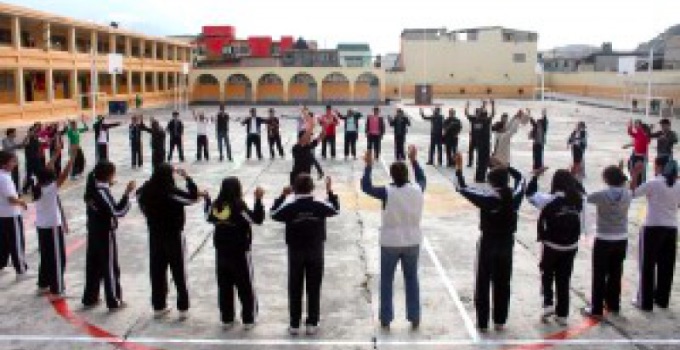
The Nonviolence Handbook: A book review

Johan Galtung: Pioneer of Peace Research, edited by Dietrich Fischer : (a review)

Education for Conflict Prevention and Peacebuilding:  Meeting the global challenges of the 21st century

Reflective Peacebuilding: A Planning, Monitoring, and Learning Tool Kit

Gender Perspective on a Culture of Peace: A Book Review

Commemorative Publication of the UNESCO Chair of Education for Peace

Books on Peace Education: Call for Manuscripts

A Hero for Our Time: Book Review of Elise Boulding

Waging Nonviolent Struggle: A Book Review

What is the best way to teach peace to children?

Here is the response of Ann Mason in 2007:

Maria Montessori believed that peace was innate within children. Her timeless educational philosophy was developed around this basic understanding. Perhaps all we need to do as teachers is to provide stimulating learning environments that validate this knowing and understanding and nurture it. We may not have to actually teach it,  Sharing peace-building stories gently attends to this. Strong, creative and imaginative peace-building characters who focus upon win-win and have faith in peace being possible are at the centre of the story plots. In Hassaun Ali-Jones Bey’s unique and mesmerising story, Black Ink is such a character who bravely crosses the universe seeking validation of what he knows in his heart. The magical character also models all the important peace-building values, understandings and actions needed for peace-building. I believe also that peace-building must be modelled and the whole teaching-learning environment should reflect similar values, understandings and actions…as is the primary focus of the Save the Children Australia UN Global Peace School Program upon which I am presently fortunate to be working. As Gandhi stated: ‘If we want peace in the world then we need to begin with the children.’ We need to listen to them. I also believe there are many ways to attend to peace-building..there’s not just one way…and fun and creativity should be elements of any peace-learning programme with children working together. Parents are also teachers and they can choose to share peace-building stories with children as well.

Here are the CPNN articles on this subject:

Democratic Republic of Congo: At least 450 orphaned children initiated into the culture of peace and peaceful living together in Bogoro

UK: Peace Education Network offers free lessons on Oppenheimer’s legacy as new film released

Australia Teachers for Peace

Brazil: Forum brings together advisors to discuss culture of peace in schools

Panama promotes the practice of values ​​for a culture of peace by students

Puerto Rico : Educate for a Culture of Peace

The Best Weapon for Peace : Maria Montessori, Education, and Children’s Rights

Global Teacher Prize: Juline Anquetin-Rault

Brazil: Compaz invites schools to the 19th edition of the book Londrina Pazeando

Spain: The Nonviolence Collective disseminates ‘Amanda’s comic’, an educational project for peace aimed at children and young people

More than 29 thousand people registered in the Second International Montessori Congress, a free virtual event

Philippines: Teach Peace Build Peace Movement

Mexico: CODHEM fulfills its mission of promoting the culture of peace and respect for Human Rights

USA: Culture of Peace: The wisdom of the 8th-grade Peace Flame Keepers

“Peace and Love rooms in schools”

USA: Conference to explore effect of early childhood development on world peace

Algeria: Civil society should inculcate the culture of peace in children

Brazil: Public schools of São Vicente transform education through the culture of peace

Almería, Spain: Over 100,000 students participate in the network of centers “The school as a space of peace”

Más de 100.000 escolares participan en la red de centros ‘Escuela: Espacio de Paz’ en Almería, Espana

– – – – Links for the following articles do not work because they were made by a version of PERL programming that is no longer supported. With three easy steps, you can find the article by its number. First, click on it before returning to this page. Your browser will say that the article is not available but in the address listed you can see that it was located at ViewArticle=xxxx where xxxx is the number of the article. Returning to this page, then click here for the listing of all years. Then click on the year that contains the number for the article you seek. It will send you to the page where you can easily search for the article by its title. – – – –

Trinidad and Tobago: Students told to create a culture of peace in classrooms

Another kind of school : An education of happiness explained by Antonella Verdiani

L’école autrement : les pédagogies du bonheur expliquées par Antonella Verdiani

UNESCO/ASPnet training on social cohesion begins

Activities of Living Values in Education Program in Brazil

Atividades do Programa Vivendo Valores na Educação no Brasil

Tenango del Valle Promotes a Culture of Peace (Mexico)

En Tenango del Valle se Fomenta una Cultura de Paz (México)

Promoting a Culture of Peace (Nicaragua)

Fomentarán cultura de paz (Nicaragua)

Agreements with organizations to work with and for the children [Cuba]

Convenios que invitan a trabajar con y para los niños

Peace Ambassadors – the Gambia: Summer School on Peace

Culture of Peace Presentation at Kitchener Collegiate Institute (Canada)

Promotion of a Culture of Peace Debated at Forum of El Moudjahid (Algeria)

La Promotion de la Culture de la Paix en débat au Forum d’El Moudjahid  (Algérie)

The Road to ‘Reclaiming Childhood’

Life-Link Friendship-Schools: Working with Schools in Arab Countries and UNESCO’s Global Network

From War Toys to Peace Art

A History Schoolbook to Learn Peace in the Balkans

Two  Free Videos for Relationship-Building Worldwide

Teaching and Learning for Peace Foundation

How can we promote a human rights, peace based education?

Here is a comment about this question from CPNN reporter Janet Hudgins:

We teach the science of war on an even and equal basis with the 3Rs and we maintain it with more resources than any other school. Further, we have done this consistently for a couple of thousand years, long before education was institutionalized for all children. And we have never questioned the wisdom of teaching millions of civilians how to kill while never giving the same credence, or any for that matter, to the science of peace, the study of anti-war, of reconciliation. With this inured mindset leaders choose to fund boot camps and officer training colleges and by omission deprive youth of the better choice.

If we can teach war and violence with such commitment to suit the purposes of generals and the arms trade, where are the rest of us who have a greater need for peace and conciliation than anyone anywhere has for the killing fields? Why have civilians not demanded peace education long ago and why don’t we have it now?

Below are articles in CPNN about this question:

Mexico: First issue of the electronic magazine “Culture of Peace” published by the State Human Rights Commission

Querétero, México; What is the culture of peace?

Mexico : Renowned researchers share their experience of the UNESCO Chairs of the Latin American and Caribbean Region

Youth Survey Report : Youth Knowledge & Interest in Peace Education

Chad: AJPNV training for democracy and human rights

Mexico: UdeC holds international discussion on the culture of peace and human rights

Australia: Conference Calls for Mainstreaming Human Rights Education

Presentation in Abidjan of a training manual on the culture of peace and social cohesion

FINOM participates in Meeting of the National Pact for the Promotion of Respect for Diversity, Culture of Peace and Human Rights

Where to Study Peace Education: A Global Directory

Africa: Through Peace Education, Youth Can Become Vanguards of Peace in the Great Lakes

Tunisia: Appeal for massive particiption in the first international meeting on education for peace

– – – – Links for the following articles do not work because they were made by a version of PERL programming that is no longer supported. With three easy steps, you can find the article by its number. First, click on it before returning to this page. Your browser will say that the article is not available but in the address listed you can see that it was located at ViewArticle=xxxx where xxxx is the number of the article. Returning to this page, then click here for the listing of all years. Then click on the year that contains the number for the article you seek. It will send you to the page where you can easily search for the article by its title. – – – –

UNESCO Initiates Peace Education Project in Northern Rakhine State of Myanmar with Support from the Belgium Government

PAG 7th International Youth Summer School underway (The Gambia)

Institutionalizing an Academic Path for Future Peacebuilders (USA)

International Institute on Peace Education 2013 – Puerto Rico

Instituto Internacional de Educación para la Paz 2013 – Puerto Rico

International Institute on Peace Education 2012

Fundació Catalunya Voluntària team receives UNV Online Volunteering Award 2011

National Peace Academy – 2012 Update

Education on the rights of the children: a strategy for peace

Union teachers will promote a culture of peace in the classroom

Maestros del SNTE promoverán en las aulas la cultura de la paz

Children voting for Human Rights

Recent Actitivities of APCEIU: The Asia-Pacific Centre of Education for International Understanding

International Symposium on Peace Education – Porto Alegre, Rio Grande do Sul, Brazil

Training Workshop on Educational Policy and Education for International Understanding

Educating where schools don’t

The Gift of an Education

The theatre, How can it contribute to the culture of peace?

Here is a response to the question submitted to CPNN by Kiki Chauvin.

The actor lives between two worlds, one of which is his proper existence and the other, the world of fiction where he takes on the role of his character. He seems to have one foot on each of them while his head collects, combines, mixes, synthesizes and puts together the emotions that are translated and expressed by body and voice.

We get it directly, it is “in our face” with no escape possible!  The richness of this mixture “reality/fiction” allows the artist to enter into us through hidden doors.

Using texts with humor and irony, the actor passes messages to which our minds would otherwise be deaf!  He affects us, challenges us, plays with us,  provokes us, making our attention an accomplice of what he has to say.

The direct contact and proximity, sometimes intimate, between stage and audience send us messages that we hear, questions that provoke us to transferring images to our daily experience, our reality, to “real life”!

Thus we are pushed and shaken from calm to storm, from injustice to anger, from hatred to solidarity,  from indifference to empathy in the face of violence.

Actors are in the public service. They are “Public Friends Number One!” They are chroniclers, “troublemakers,”  breakers of habit, forcing us to think things through.

The culture of peace needs the oxygen of this youthful spirit! ,  I believe that art in general, with its playfulness, has the power to awaken us. It is an excellent support to the promotion of the Culture of Peace.

I love the theater, it is a space of freedom where actors can transmit an energy drawn from the conviction of what they say.

We hear, receive, understand  for a digestion that may be immediate and /or delayed. Some part is absorbed immediately, but the rest we take home with us.  . . .  and that is where the seeds of consciousness begin to germinate into the Culture of Peace.

Here are CPNN articles pertaining to this question:

World Theatre Day March 27

Philippines: Theater, a tool for international understanding

Mexico, Los Cabos, Baja California Sur: Theater show celebrated on Theater Day

México, Los Cabos, Baja California Sur: Con muestra de trabajo escénico se celebró el Día del Teatro

From the “jungle” to the theater, refugees replay their exile to Europe

De la “jungle” au théâtre, des réfugiés rejouent leur exil vers l’Europe

– – – – Links for the following articles do not work because they were made by a version of PERL programming that is no longer supported. With three easy steps, you can find the article by its number. First, click on it before returning to this page. Your browser will say that the article is not available but in the address listed you can see that it was located at ViewArticle=xxxx where xxxx is the number of the article. Returning to this page, then click here for the listing of all years. Then click on the year that contains the number for the article you seek. It will send you to the page where you can easily search for the article by its title. – – – –

Interview with Ms. Cecile Guidote-Alvarez Director, UNESCO DREAM Center, Philippines

Shades, an Anti-war Play, Opens to Rave Reviews in Los Angeles