… EDUCATION FOR PEACE …
A post on the Facebook page of Mochicahui Unit UAIM (translation by CPNN)
A workshop titled “Culture of Peace,” led by Dr. Gerardo Pérez Viramontes, an expert in culture of peace and conflict resolution and an active member of international research networks in the field, was held for senior management at the Autonomous Indigenous University of Mexico (UAIM) located in Mochicahui, state of Sinaloa.
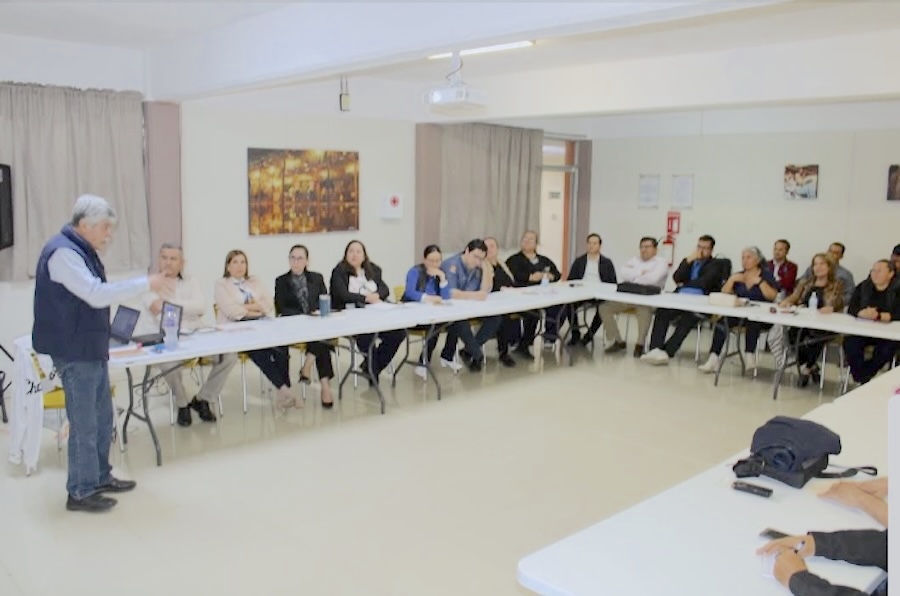
Lasting two days, this initiative aimed to strengthen institutional leadership through reflection, dialogue, and the development of practices geared toward harmonious coexistence and the peaceful resolution of conflicts.
(Continued in right column)
Where is peace education taking place?
Is there progress towards a culture of peace in Mexico?
(Continued from left column)
At the opening of the workshop, Rector Jesús Rodolfo Cuadras Sainz welcomed the participants, emphasizing the importance of leadership involvement in promoting harmonious coexistence and the peaceful resolution of conflicts. “If we, as administrators, are not capable of resolving our own conflicts, how can we set an example for the university community?” he stated. He also emphasized that a culture of peace is a legal and educational commitment already established in the UAIM Organic Law and the General Education Law.
For his part, Dr. Pérez Viramontes pointed out that peace is not an abstract concept, but a process that requires will, projects, and tools to be consolidated. He noted that UAIM, as a cultural institution, has the responsibility to promote practices that strengthen sustainable reconciliation in divided societies, which will allow it to consolidate its institutional commitment to fostering a culture of peace and reaffirm its role as an educational institution that seeks to train leaders capable of promoting harmonious coexistence and respect at all levels of university life.
The course addressed fundamental topics such as the deconstruction of violence, the regulation and transformation of conflicts, the identification of mediations and pacifist empowerment, as well as reflecting on new epistemologies applied to the culture of peace and sustainable reconciliation in divided societies.
– – – – – –
If you wish to make a comment on this article, you may write to coordinator@cpnn-world.org with the title “Comment on (name of article)” and we will put your comment on line. Because of the flood of spam, we have discontinued the direct application of comments.